


Rome, Beyond the Postcard: Where to Stay, What to See, What to Skip & Editor’s Picks

Rome is one of those cities that can feel almost too familiar before you arrive. The Colosseum, Trevi Fountain, Pantheon and Vatican have been photographed so many times that it is easy to wonder what could possibly be left to discover. Quite a lot, actually. The secret to enjoying Rome is not avoiding its famous sights, but knowing when to see them, where to stay and when to turn down a quieter street and let the city reveal itself.

Rome, Photo/Etienne Parmenter
For a first visit, I would absolutely see the major monuments. They are famous for a reason, and standing inside the Colosseum or beneath the dome of the Pantheon is very different from seeing them on a screen. But I would build the rest of the trip around Rome's neighborhoods, small restaurants, historic palazzi, independent shops, intimate wine bars and quieter corners where daily Roman life continues largely undisturbed. The city becomes much more interesting when you stop treating it as an outdoor museum.
Getting to Rome
Getting to Rome from Miami is easy, with nonstop service from Miami International Airport (MIA) to Rome Fiumicino Airport (FCO) on ITA Airways, with flights taking about 10 hours. Current schedules include afternoon and evening departures, and I prefer an evening flight from Miami, which allows you to arrive in Rome the following morning and start exploring without losing an entire day to travel, assuming you can sleep for part of the flight. American Airlines also currently offers Miami-Rome service, so it is worth comparing schedules and fares when booking.
Once you arrive at Fiumicino, getting into the city is straightforward. I used Uber, although the pickup location was not immediately obvious and required about a five-minute walk. Official taxis are an equally easy option, with a fixed fare between Fiumicino and destinations within Rome’s Aurelian Walls. I found that credit cards were accepted for transportation, making it unnecessary to carry much cash. You can also check with your hotel about arranging private transportation if you prefer a door-to-door option.
When to Go
Spring and early fall are arguably the sweet spots, particularly April through May and late September through October, when temperatures are generally more comfortable for walking and outdoor dining. Summer can be beautiful but hot, crowded and busy, while August brings its own complications as some independent businesses close or reduce their hours. Winter offers fewer crowds and a different atmosphere, although the days are shorter and the weather less predictable.

Rome, Photo/Sophie Backes
If possible, I would also avoid building a Rome itinerary around the busiest holiday periods. The city is increasingly popular with international visitors, and the most famous monuments can become extraordinarily congested during peak hours.
What to Avoid
The biggest mistake in Rome is trying to see everything in one trip. The second is spending the entire day following the same route as every other visitor. Trevi Fountain at midday, for example, can feel more like a crowd-management exercise than a Roman experience. Visit early in the morning or later in the evening, then move on.

Rome Crowds, Photo/Cosmo Wei
I would also be cautious about restaurants directly surrounding the most famous monuments. Some are perfectly good, but the best Roman meals are often found several streets away, where the clientele includes locals and the menu has not been designed primarily around passing tourists. Rome rewards curiosity. Walk a little farther.
Where to Stay
For an upscale stay, location matters as much as the hotel itself. The historic center puts you within walking distance of many of Rome’s major sights. For this story, I stayed at three properties, each offering five-star accommodations and service, but with something distinctly different depending on your style.
Palazzo Ripetta is ideal for travelers who want history with a contemporary edge. Set near Piazza del Popolo, the former convent combines its historic architecture with modern Italian design, an art collection, a private garden and rooftop dining. Read our full review of Palazzo Ripetta here.

Palazzo Ripetta, Photo/Palazzo Ripetta
Bvlgari Hotel Roma brings the world of the jewelry maison into a Roman setting, with an impressive collection of art and books devoted to the city, a spectacular rooftop and a spa inspired by the tradition of Roman baths. Its location in Campo Marzio also puts some of Rome's most elegant streets within easy reach. Read our full review of Bvlgari Hotel Roma here.

Bvlgari Hotel Roma, Photo/Bvlgari
Hotel de Russie Rome offers one of the city's most coveted locations near Piazza del Popolo, but its real attraction is what happens behind the façade: the beautiful Secret Garden, a remarkably tranquil retreat in the middle of Rome. It is an excellent choice for travelers who want to be close to the action while having somewhere peaceful to escape to. Read our full review of Hotel de Russie Rome here.

Hotel de Russie Rome, Photo/Rocco Forte
12 Must-See Sites
1. Colosseum
Rome’s most iconic ancient monument and an essential first visit.
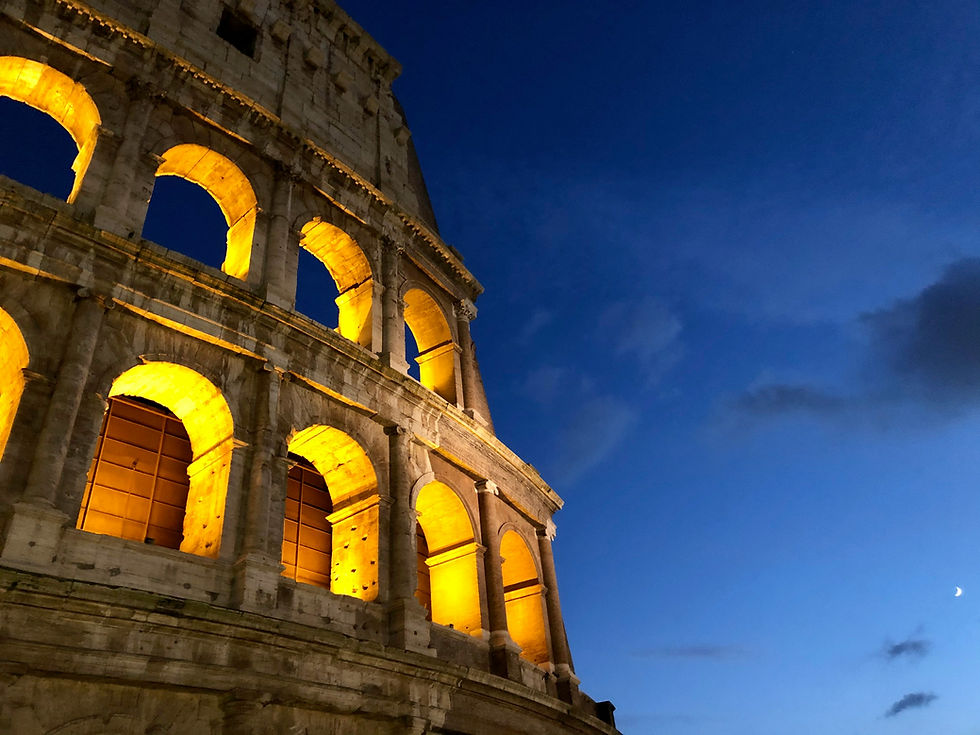
Colosseum, Photo/Merch Husey
The center of ancient Roman life, best explored alongside the Colosseum.
3. Pantheon
One of the world’s best-preserved ancient buildings, with its remarkable domed interior.
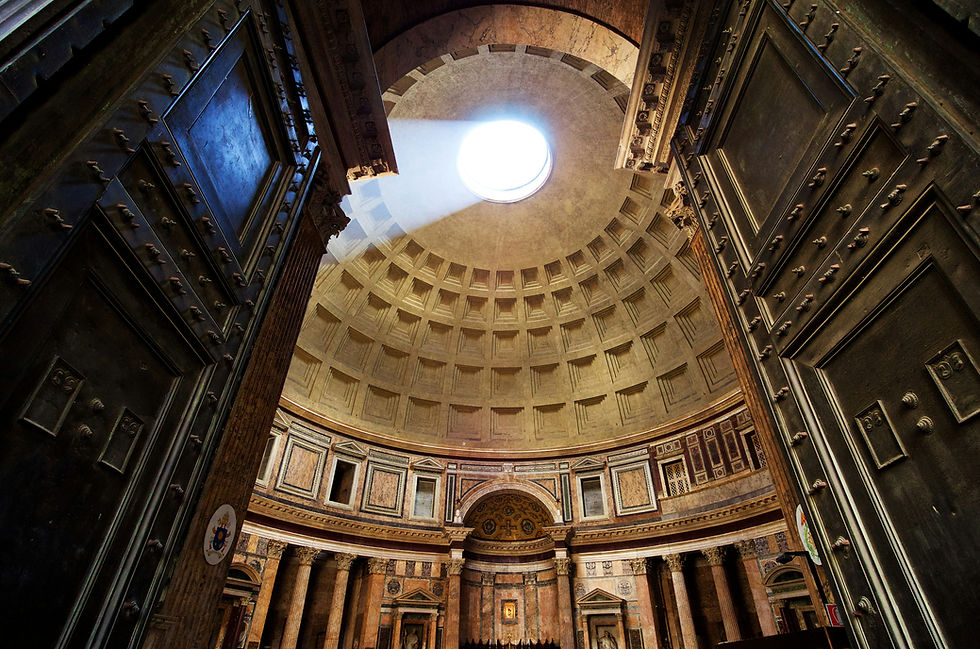
Pantheon, Photo/Evan Qu
One of Rome’s most famous landmarks. Go early or late to avoid the biggest crowds.

Trevi Fountain, Photo/Andrey Omelyanchuk
A vast collection of art and one of the world’s most famous painted interiors.

Entrance of the Sistine Chapel/Photo Desiree M
An extraordinary combination of architecture, art and religious history.
A spectacular Baroque piazza centered around Bernini’s Fountain of the Four Rivers.
A classic Roman landmark surrounded by some of the city’s best shopping and elegant streets.
A former mausoleum and fortress with impressive views toward St. Peter’s.

Castel Sant’Angelo, Photo/Dave Meckler
One of Rome’s finest art museums, particularly for its Bernini sculptures and Caravaggio paintings.
Rome’s striking contemporary art and architecture museum, designed by Zaha Hadid and a completely different experience from the city’s ancient collections.

MAXXI Museum, Photo/Alessio Lin
12. Villa Borghese (Park)
A huge green oasis in central Rome, with gardens, fountains, sculptures, museums and walking paths. The park is free, but a ticket is required to visit the Galleria Borghese within it.

Villa Borghese, Photo/Ajrina Baradja
Undiscovered Rome
These lesser-known places offer a different perspective on Rome. If you have time, be sure to explore a few of them, or mix these off-the-beaten-path spots with the city’s major historical sites for a more balanced experience.
One of Rome’s most unusual architectural enclaves, this small complex near Piazza Mincio combines Art Nouveau, Art Deco, Gothic, Baroque and medieval influences. Designed primarily by architect Gino Coppedè between 1915 and 1927, it includes the whimsical Villino delle Fate, the spider-adorned Palazzina del Ragno and the Fontana delle Rane. It is an especially good choice for architecture and design-minded travelers.

Quartiere Coppedè/Photo/QC
This former 1912 power station is now one of Rome’s most unusual museums, displaying ancient Roman sculptures and mosaics alongside the original industrial machinery. The contrast between classical art and massive turbines makes it feel completely different from Rome’s traditional museums. It is part of the Capitoline Museums system.

Centrale Montemartini, Photo/Centrale Montemartini Museum
This former aristocratic estate on Via Nomentana is one of Rome’s more eccentric parks. Its highlight is the Casina delle Civette, a fantastical early-20th-century villa filled with colorful stained glass, mosaics, majolica and decorative details inspired by nature. The estate also contains the Casino Nobile and other historic structures.
Tucked behind the Pyramid of Cestius in Testaccio, this historic garden cemetery has been active since 1716 and contains more than 6,000 burials representing dozens of nationalities and religious backgrounds. Among its best-known graves are those of poets John Keats and Percy Bysshe Shelley. It is a peaceful, beautifully landscaped place rather than a conventional sightseeing stop.
On the southeastern edge of Rome, this expansive park places visitors beneath some of the city's most impressive ancient infrastructure. The park covers roughly 240 hectares and contains the remains of seven aqueducts, including the spectacular Aqua Claudia, while also offering open countryside and walking paths. It is particularly beautiful around sunset.
Rather than simply looking at Rome's ancient walls from the outside, this small museum takes you inside Porta San Sebastiano, one of the largest and best-preserved gates in the Aurelian Walls. Exhibits trace the development of Rome's fortifications, while sections of the walls themselves make the visit particularly atmospheric.
Hidden within Trastevere, the Botanical Garden of Rome occupies the grounds of a former papal garden and offers a welcome change of pace from monuments and museums. It includes extensive plant collections, greenhouses and themed gardens. It is operated by Sapienza University and remains surprisingly easy to overlook despite being relatively central.
Garbatella
Rather than a single attraction, Garbatella is a neighborhood worth exploring on foot. Developed beginning in the 1920s, it is known for its distinctive low-rise architecture, garden courtyards, stairways and communal spaces. It offers a much more residential view of Rome and works particularly well as a neighborhood walk rather than a checklist of monuments.
Before You Go
Watch your belongings: Pickpockets are common in crowded areas, especially around major attractions and on public transportation.
Credit cards: Most hotels, restaurants and shops accept major credit cards, but carrying some cash is still useful.
Hire a guide: A knowledgeable guide can add considerably more context to Rome’s history. For a more personal experience, consider a private guide.
Book ahead: Many historical sites have long lines, particularly during peak travel periods.
Vatican Museums: Expect crowds year-round. Buy tickets in advance and go as early as possible.
Start early: Early mornings are generally the best time to experience Rome’s major attractions with fewer people.
