


Smarter Farms, Fresher Plates: 6 AgTech Innovations Shaping Miami's Food Future
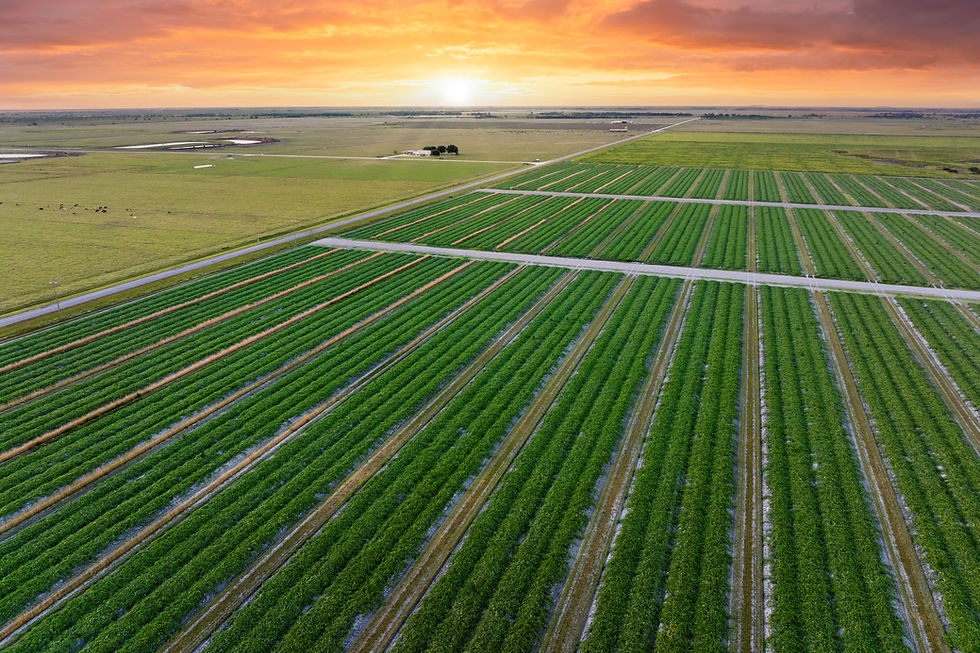
Image by DepositPhotos
Where Miami-Dade's Harvest Goes
Six technologies are changing how food gets grown at the southern edge of Miami-Dade this fall, and on the evidence so far they don't all deserve equal attention. Growers in the Redland and Homestead, university researchers and a few venture-backed startups are putting sensors, drones, software and fish tanks to work as the winter planting season begins. They're doing it because farmland is shrinking, water is expensive to waste and one tree disease can empty a grove. Whether any of it puts fresher food on a Miami plate is a separate matter, and the answer looks less flattering than the marketing.
Start with a number most diners have never heard. The county's own tally is that about 89 percent of what Miami-Dade farms produce is shipped out of the region. It goes to the Northeast, to the central states, to Canada. This is a county that leads the nation in ornamental plants and sits second in Florida for farm production value, and still most of what it grows seems to be eaten somewhere else.
Keep that gap in mind for everything that follows. If a tool helps a grove last another ten years, it has probably done more for local eating than one that looks good in a photo shoot. That's how this list is ordered, most useful first, and yes, it will annoy a few people who sell lettuce towers.
Water First: Soil-Moisture Sensing
Top of the list, and by some distance, is a soil-moisture sensor wired to the irrigation system. Dig a hole in South Dade and the shovel finds rock before long. How much water ground like that can bank is a question UF/IFAS keeps returning to in its advice on irrigation scheduling in tropical fruit groves. Its answer to guesswork is a tensiometer or a buried probe, either of which reports soil water as it changes. Then the trees get watered when they're dry, and the calendar stops being in charge.
The proof was gathered close to home. In Homestead, at the university's research center, a UF/IFAS study of its avocado irrigation app looked at the watering schedule the free app produces for a grove. Its conclusion was that growers could use less water, and less energy to pump it, with no loss of yield. Nobody would call that finding glamorous, which may be why it so rarely turns up on lists like this one.
Why begin with water? Because most other costs on a farm run through it. Fertilizer is the obvious example. When more water goes onto porous ground than the roots can take up, some of what the grower paid for may simply drain away below the tree. So measuring before watering probably saves money twice, on the pump's electric bill and on the fertilizer invoice. For an operation deciding where to spend its first technology dollar, this looks like the purchase.
Vegetable growers aren't left out. There's a UF/IFAS publication, revised in 2024, on automatic irrigation driven by soil-moisture readings. Tomatoes in Homestead were the test crop for one of its controllers. A farm new to all this should begin with one block. That block gets the sensors, provided it's typical of the farm, while the one beside it stays on the old schedule. A season later there are two sets of water and yield figures to compare. Probe placement matters too, because a probe buried in the wettest or driest corner sends readings that are wrong for the field as a whole.
Software That Reads the Field
Second place goes to digital farming solutions, the software category that turns those readings into decisions. On their own, numbers from a probe don't tell a grower much. They have to be read alongside weather records, drone or satellite imagery and the log of what fertilizer went down and when. Platforms in this category gather that field data in one place. With everything on a single screen, the calls on irrigation, nutrients and pests can come earlier, and there's evidence to point to when they do.
For a family operation with forty acres of mamey and lychee, that probably matters more than any robot. Think about what a wrong guess on fertilizer costs. Too little and the tree goes hungry. Too much and the excess ends up in the groundwater, and either way a consultant's visit to sort it out isn't free. Software can't make a small grove rich, though it can cut down the number of expensive guesses in a season. Nurseries face the same arithmetic. The county leads the nation in ornamental plants, and in that business one missed irrigation cycle can leave a whole bench unsellable.
Anyone shopping for a platform should put three questions to the vendor before signing a subscription. Does it read the sensors already in the ground? Can the farm get its records out if the company folds? And once the data is uploaded, whose is it? Growers who have kept a careful spray and fertilizer log for years will probably see value soonest, since the software then has a history to work with from day one.
Drones Against Laurel Wilt

Image by DepositPhotos
Third on the list is aerial scouting, and avocados explain why. The enemy is laurel wilt, a fungal disease that ambrosia beetles carry from tree to tree. South Florida grows about 95 percent of the state's avocados, and that's exactly where the disease has been killing trees. UF/IFAS reckons the industry is worth roughly $100 million a year. Its engineers went looking for a faster way to spot trouble and found that multispectral cameras mounted on drones can flag infected avocado trees before symptoms appear. Why does an early warning matter so much? Because neighboring avocado trees share roots and the disease moves along them, so one tree pulled early may be the price of keeping the row.
As for cost, those researchers quoted $3,000 to $8,000 in 2019 for a drone carrying the right camera. Prices have likely moved since then. That's within reach of a mid-sized grove, or of a scouting service shared among neighbors. It's also a reminder of what this technology is for, which is defense. The payoff from a drone flight is a tree that's still standing next season.
None of this retires the scout on foot, and plenty of growers will go on trusting their own eyes over a camera. Eyes have one drawback, which is timing. What a person walking the rows can see is wilted leaves, and by the time leaves wilt the disease has had a head start. The sensible routine pairs the two methods. The drone flies on a fixed schedule and a person then walks out to every tree the imagery flags. After that the removal decision has to come fast, since a map of infected trees does nothing for a grower who sits on it.
What Chef-Owned Farms Show
Here's where the "fresher plates" half of the promise gets tested. At least some of the Miami kitchens with the shortest supply chains got there without any of this equipment. Chef Niven Patel built his reputation on a two-acre Homestead farm that grows produce for his restaurants, and what closes the distance there is ownership and a short drive, with no app required.
That isn't an argument against the tools. It's an argument about sequence. A chef's two acres can't feed a city. The commercial groves could, and they're the ones that need sensors and software to stay in business, so the first job is keeping those farms solvent. Which restaurant ends up with the fruit is a question for afterward.
Traceability, by Regulation
Fourth is digital traceability, the one item here that regulators are forcing. A Food and Drug Administration rule requires extra recordkeeping for foods on a federal traceability list from the businesses that manufacture, process, pack or hold them. Compliance was originally due on January 20, 2026, and enforcement has since been pushed back to July 20, 2028.
What's on that list matters a great deal in South Dade. The FDA's Food Traceability List covers fresh leafy greens, fresh tomatoes and fresh tropical tree fruits, which sweeps in much of what the Redland is known for. It leaves out avocados, which the agency classes as pit fruits. A packinghouse handling both mangoes and avocados will therefore run two sets of rules through one loading dock, and it should map which products are covered before buying any system.
The delay shouldn't lull anyone in the produce trade. Lot codes assigned at the packinghouse and passed down the chain are what let a restaurant say which farm a mango came from and mean it. Diners at Miami's Michelin-starred restaurants are often told where an ingredient came from, and before long there should be records to check those stories against.
Small packers will grumble about the cost, and they have a point, since scanners and software land hardest on the operations with the least office staff. Against that, consider what happens in a recall. If the problem can be pinned to a single lot, other growers shipping the same fruit that week may be spared. Nobody has to do everything at once, either. A packer could start by swapping lot-level records with one willing buyer this season, while the stakes are low, and see where the gaps are. Chefs and purchasing managers can help by asking suppliers for those records now.
Salmon in Homestead
Fifth, and the strangest sight in South Dade, is salmon. In Homestead, of all places, Atlantic Sapphire raises Atlantic salmon in tanks on dry land. How much fish is that? The company's first-quarter 2026 operational update puts the harvest for those three months at 1,504 metric tons. The quarter before, it was 1,183. For scale, the first phase of the plant was designed for something like 7,500 to 8,500 tons a year.
It ranks low here for a plain reason. The engineering is impressive and the fish starts its trip far closer to Miami diners than anything flown in from Norway or Chile, but one company in one building is a bet, and the bet isn't settled. Investors have been told to expect EBITDA break-even by the end of 2026. If that arrives on schedule, the ranking here deserves another look, and until then promising is as far as the evidence goes.
For restaurant buyers the practical reading is simple enough. Local land-raised salmon is worth putting on a menu, and it shouldn't be the only salmon supplier on the books while the business is still proving itself. Finfish also sit on the federal traceability list, so the recordkeeping habits described above apply here too.
Indoor Greens and Their Limits

Image by DepositPhotos
Last comes the one with the best publicity, indoor hydroponic farming. Give it its due first. A warehouse grower a few miles from the kitchen can cut lettuce, herbs or microgreens in the morning and have them at the back door the same day. A field an hour's drive south has a harder time promising that to plant-based restaurants across Miami, which are the obvious buyers. On those crops the freshness claim is fair.
The scale is worth seeing clearly. In one South Florida vertical farm profiled by Opportunity Miami, produce grows in 480 trays, about 40 percent of it is donated and the remainder is sold to restaurants and supermarkets, mostly in the Miami area. That's a useful business and a good neighbor. It is also a small number of trays set against the appetite of a whole county.
The trouble starts with the crop list. Leafy greens are a sliver of what people eat, the lights and cooling run on Florida electricity bills, and it's hard to picture a stack of trays growing a mango, an avocado or a row of green beans at a price a family can pay. For now, indoor farms look like a garnish on the food system, and treating them as the main course lets everyone look away from the fields.
The people running these farms deserve no blame for any of that. If a chef wants basil that was cut this morning, a warehouse two neighborhoods away is the right place to get it. It's still wise to ask what happens to the price over a year, and who the backup supplier is, before a menu gets built around one grower. The mistake is in the headline, when a few thousand square feet of greens gets described as the future of how Miami eats.
Acres Decide the Rest
There's also the awkward matter of where the harvest goes. Better yields in the Redland don't automatically mean more local food in Miami, because trucks tend to follow price, and the county's own shipping figure suggests price has pointed north for a long time. Technology makes the farm more efficient and has no opinion about the destination.
The county seems to understand part of this. Its study with UF, released in October 2023, set out to evaluate emerging technological changes and to project how much farmland the industry needs to stay viable, and a county memo on the findings put the requirement at a minimum of 64,800 acres in 2030. The same memo counted 52,630 acres carrying an agricultural tax classification in September 2023, after a drop of more than 10 percent. The two figures are measured differently and shouldn't be subtracted from each other, but the direction is hard to miss.
Reports are cheap, though, and zoning votes are where acres get won or lost. In 2025 a county commission vote cleared the way for roughly 700 townhomes on 90 acres of Redland farmland, and residents answered with a recall petition against the district's commissioner. Whatever one thinks of that project, it shows how quickly a grove can leave the ledger.
Every one of the first three tools on this list makes an acre more productive. None of them makes an acre. Sensors will keep getting cheaper and the records tighter, and Miami should soon be able to trace a starfruit from grove to plate with a precision no earlier generation of diners had.
Three kinds of readers can act on this now. Growers can take the tools in the order above, water first, then software, then scouting, and judge each by a season of their own numbers. Chefs and grocery buyers can ask for Redland fruit in season and for the lot records behind it. And anyone who eats here can follow the county's Agricultural Practices Advisory Board, which generally meets on the first Wednesday of each month in Homestead, because that's the kind of room where farmland policy gets argued.
What the city may not have, by the time the system works perfectly, is the grove. Who's going to scan a code that leads back to a row of townhouses?