


A Family Recipe: From Clam Shack to Nantucket Icon

On Nantucket’s shore, Galley Beach has a way of making an afternoon stretch into an evening. Lunch can begin beneath the covered porch, move to cocktails by the fire pits, and end with the sun dropping into Nantucket Sound. The setting feels effortless, but nearly every detail tells a story about the family that has shaped it for generations.
One of the most consequential chapters began far from Nantucket, with a Palm Beach connection. In 1978, Jane Silva, who had taken over the restaurant from her mother, traveled through the French Riviera with her partner, Ivan Skender. Ivan was then maître d’ at The Colony in Palm Beach. At a seaside restaurant, over rosé and moules-frites, they began to imagine what Galley Beach might become: a place where people came for the pleasure of dining by the water, open to everyone rather than only to beach club members.
Back on Nantucket, Jane and Ivan translated that feeling into their own surroundings. A blue-and-white striped awning replaced the old thatched roof. Red geraniums filled the window boxes, French music played, and the takeout window was closed as the restaurant opened fully to the public. It was an evolution for a place that had once served hot dogs, clams and sodas to beachgoers.

The family’s history at Galley Beach reaches back to 1958, when Jane’s parents, Emma Lea and Bob Currie, purchased the private beach club of which the restaurant was a part. Known then as The Galley on Cliffside Beach, it was an informal lunch spot. Emma Lea covered the outdoor dining area with a thatched roof and, with her friend and fellow owner Mary Huffman, hauled a dory that had washed ashore up to the entrance and planted it with geraniums. A flower-filled dory still welcomes guests today.
Jane brought new ambition to the kitchen as well as the dining room. Family friend Lucien van Vyve, chef of Nantucket’s Opera House restaurant, taught her to prepare French and Belgian dishes. His illustrations now appear on Galley Beach’s wine list, and David and Eliza Silva named one of their sons after him. It is the sort of detail that might pass unnoticed on a busy summer night, yet says much about how closely the restaurant’s history and the family’s own are intertwined.

Jane’s sons David and Geoffrey Silva took over in 1997. By then, the building had weathered decades of coastal storms. Its floorboards sagged; at one point, a refrigerator fell through the floor. In 2008, the brothers undertook a major renovation with David’s wife, celebrated interior designer Eliza Silva, and her father, architect John Newman.

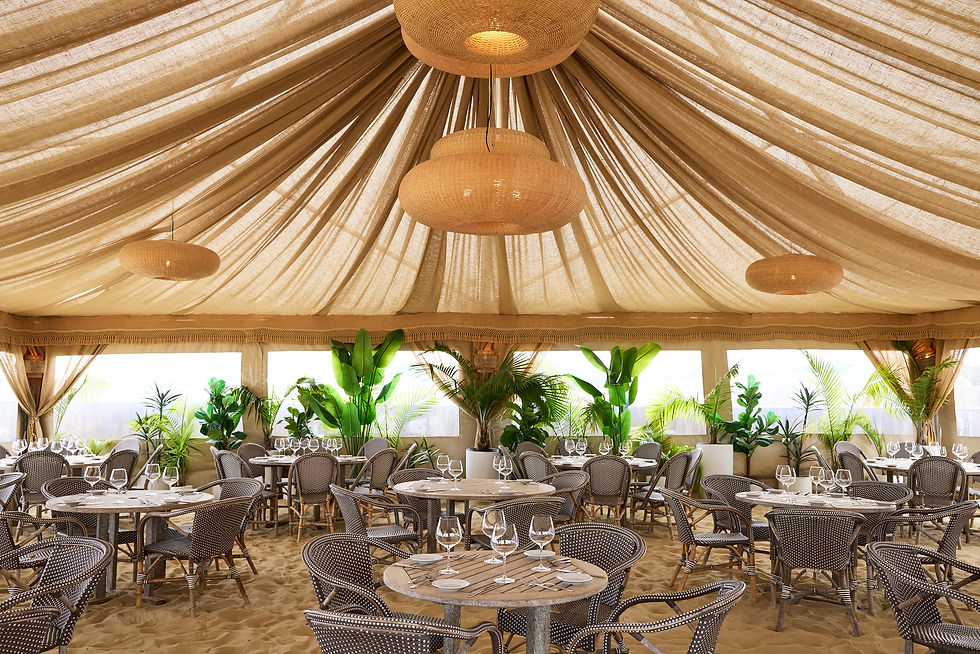
They built for the future while finding ways to keep the old Galley present. The original roof structure was dismantled, catalogued and reassembled inside the new building. Exterior walls, windows and cedar shingles were salvaged and reused. Eliza carried forward Jane’s affection for the French coast through materials and atmosphere: pewter cocktail and coffee bars handcrafted in Paris, European café chairs, marble floors and spaces that remain open to the sea air. Her brother, Nantucket craftsman Josiah Newman, made the interior dining tables.

The wine program reflects that same preference for the personal over the expected. Rather than relying only on familiar labels, Galley Beach’s team travels to wine regions, meets winemakers and cultivates relationships that broaden what it can offer guests. Among its finds is a 2023 Meursault Les Tillets from Domaine Deux Roches. It was the first barrel of that wine ever produced, and Galley Beach Restaurant purchased the entire barrel, making it a particularly rare discovery for American diners.
For Palm Beach residents who head north each summer, Galley Beach’s story offers a familiar connection: a shared appreciation for long lunches, good wine, and life by the water. The spirit Jane and Ivan brought home from the Riviera has evolved with each generation, shaped by the family’s own tastes and traditions into the beloved restaurant where David and Eliza welcome guests today.

At Galley Beach, the past remains visible without holding the place still. The dory is at the entrance. Lucien’s art is on the wine list. A rare bottle may arrive at the table because someone on the team took the time to meet its maker. As the light fades across Nantucket Sound, those details give the restaurant its character and leave room for the future. Whatever that may be, we sure hope theyll save us a seat.