


Villa Lyla in Nassau Bahamas Reveals SAOTA Designed Tropical Canal Side Retreat
Updated: Feb 17
Just over an hour’s flight from Miami to Nassau, Villa Lyla offers a striking example of contemporary tropical living in The Bahamas, blending South African modernism with Caribbean ease. Located on the island of Nassau, the private residence sits along a tranquil canal, where lush gardens, private docks, and expansive water views create a serene counterpoint to the region’s growing architectural ambition.


Villa Lyla is a private home that explores proportion, layered forms, and a grounded relationship to its landscape within a canal side tropical setting. Designed by the acclaimed architecture studio SAOTA, the residence is conceived as a peaceful retreat that balances formal rigor with a relaxed, climate responsive approach to daily life. Generous overhangs, glazed openings, and carefully oriented volumes allow light, air, and vegetation to move freely through the house, reinforcing a seamless connection between indoors and out.


Named in memory of the homeowner’s late daughter, the villa carries a quiet sense of reverence that informs its spatial composition. Axial sightlines draw the eye through courtyards, terraces, and planted edges toward the canal and surrounding greenery beyond. The architecture is embedded into its site, blurring the boundary between built form and landscape while remaining clearly structured and intentional.


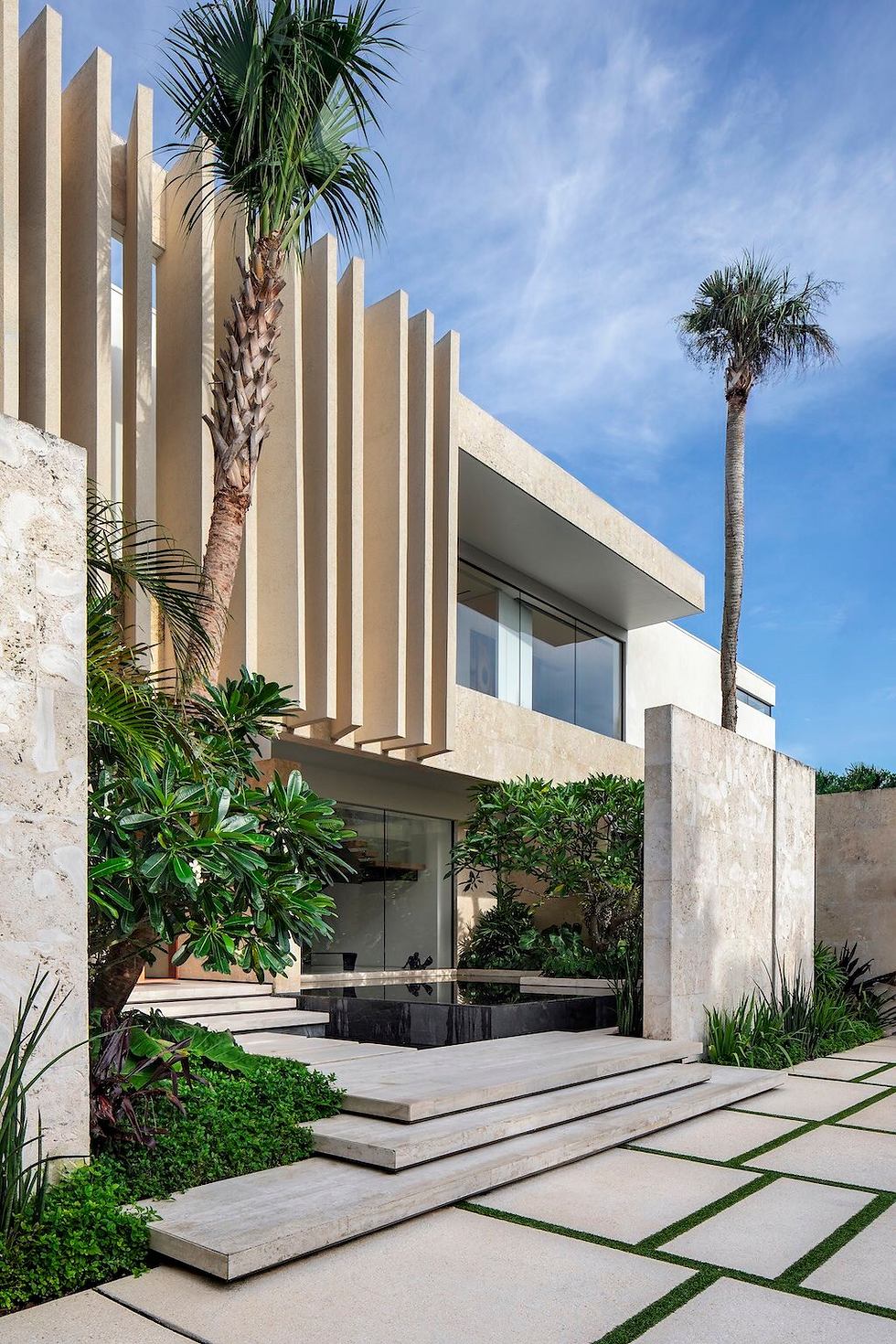
A defining feature of the home’s exterior is a series of oversized coral stone fins. These sculptural elements are both functional and expressive, modulating light, framing views, and anchoring the facade in its coastal context. Locally quarried coral stone, used in contrasting tones and finishes, provides a tactile connection to the Bahamian environment and gives the villa a sense of permanence within its setting.


The program extends beyond the main residence to include a separate pavilion housing a guest suite and office. This additional volume maintains privacy while echoing the architectural language of the primary structure. Across all spaces, generous ceiling heights and a consistent material palette create cohesion, allowing natural light to be abundant yet carefully controlled.

Interiors by ARRCC strike a balance between restraint and expression. Timber and stone finishes add warmth, while large format glazing invites the landscape inward. A curated selection of works by Bahamian artists, including the late John Beadle, reinforces a strong sense of place. These are layered with bespoke furnishings such as a sculptural dining table by Nada Debs and a refined pendant by Martin Doller, creating interiors that feel tactile, personal, and deeply connected to the architecture.


The surrounding landscape, designed by Raymond Jungles, is integral to the spatial experience of the house. Gardens and courtyards function as outdoor rooms, planted with native species suited to the humid coastal climate. Water features and artworks, including a prominent sculpture by Lionel Smit, are woven into the design, offering moments of transition, retreat, and reflection rather than ornamental display.