


The Real Price of Driving a Toyota in Miami
Updated: May 13
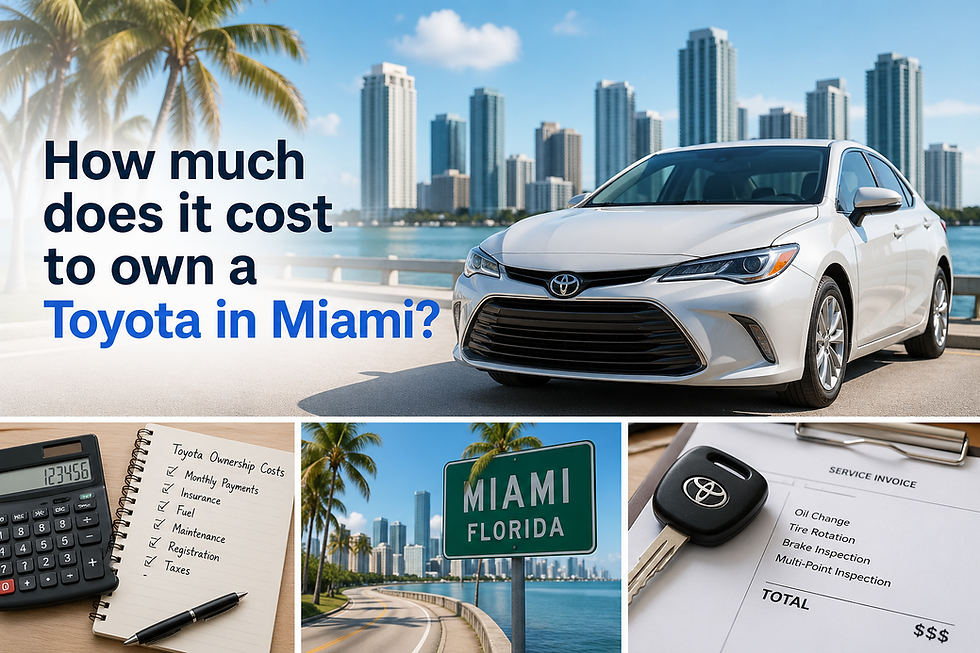
Ask three Toyota owners in Miami what it costs to “own the car,” and you’ll get three different answers because the car payment is only the loudest expense. The real number is a stack of smaller (and not-so-small) costs that change depending on where you live, how you drive, and what you’re insuring.

Image by DepositPhotos
1) Purchase Price or Monthly Payment (Plus Depreciation)
Start with the obvious part: buying the Toyota. If you finance a newer Corolla or Camry, you might feel comfortable with the payment. Step up to a newer RAV4, Highlander, or Tacoma and the monthly bill can jump fast, especially if your interest rate isn’t exceptional.
If you pay cash, you dodge the monthly payment, but you don’t dodge the cost; you just pay it in a quieter way through depreciation (the car slowly losing value while you own it). That’s why many Miami buyers aim for “lightly used” rather than brand-new: you often get most of the reliability without absorbing the steepest value drop.
For some drivers, especially those who don’t commute daily, comparing ownership costs with short-term options like rentals can be worth exploring.
2) Insurance Costs in Miami (Often the Biggest Surprise)
Then comes the part people underestimate until they’re staring at a quote: insurance. Miami can be pricey for premiums, and it’s not because you chose a “bad” car. It’s the mix of heavy traffic, accident rates, theft risk, and the general South Florida driving ecosystem.
Your zip code matters more than you’d think. So does whether you’re carrying full coverage (most lenders require it). Two neighbors can drive similar Toyotas and still pay very different rates based on driving history, age, deductibles, and coverage limits. If you’re shopping, it’s worth checking car insurance in Florida early in the process before you lock yourself into a trim, model year, or loan that forces a certain coverage level.
3) Fuel Costs (Miami Traffic Changes the Math)
Fuel is usually where Toyota ownership feels like a win, but Miami driving has its own personality. Lots of short trips, stop-and-go traffic, and idling in heat can drag down mileage. A Corolla tends to sip fuel compared to an SUV, and hybrids can be genuinely helpful if you’re in traffic most days.
The best way to estimate your gas cost isn’t by guessing; it’s by being honest about your routine. If you’re doing quick errands, school runs, or crawling through rush hour, assume your MPG won’t match the best-case numbers you see online.
4) Maintenance and Repairs (Reliable, Not Free)
Maintenance is the area where Toyotas earn their reputation, but it’s still a real expense. You’ll pay for oil changes, filters, tire rotations, tires eventually, and brakes if you do a lot of city driving.
Miami’s heat also has a habit of shortening the life of things that feel “random,” like batteries and wiper blades. None of this is unique to Toyota, but the nice part is that most Toyota maintenance is boring, and boring is usually cheap. The trouble starts when people skip routine service and then get hit with a bigger bill later.
5) Florida Fees, Taxes, and Registration
Florida fees and paperwork costs are easier to plan for, but they still surprise first-time buyers because they show up right when your wallet is already drained. Title, registration, dealer fees, and renewals aren’t glamorous, but they’re part of the ownership math.
6) The Miami Extras: Parking, Tolls, and Weather Wear
Finally, there are the Miami extras: parking and tolls. If you live in a building that charges for a space, or you’re paying for garages regularly, that’s a monthly cost that can rival a utility bill. Tolls can be the same way, small charges that don’t feel like much until you look back at a month of commuting and errands.
Add in the occasional detailing or extra car washes (between rain, heat, and coastal air), and you’ve got a few more line items people forget to include.

Image by DepositPhotos
What’s a Realistic Monthly Total?
If you’re driving an older, paid-off Toyota, your monthly “ownership” cost might mostly be insurance, gas, and upkeep, often a few hundred dollars depending on how much you drive and what your insurance looks like.
If you’re financing a newer Toyota and carrying full coverage, it’s common for the all-in number (payment or depreciation; insurance; fuel; maintenance; plus the Miami add-ons) to land somewhere in the high hundreds to well over a thousand per month. That range is wide because your choices make a big difference.