


Scenic Drives and Must-Visit Stops Along Florida's Overseas Highway

Image by miami2you / Adobestock
Driving from Miami to Key West isn’t just about getting from point A to point B. It’s one of the most visually rewarding road trips in the United States, and it only takes a few hours — if you don’t stop. But you will.
The journey stretches 113 miles across dozens of bridges, each offering something different. You'll pass through quiet towns, marine sanctuaries, and open stretches where the road floats just above the water.
According to Florida’s Department of Transportation, over 42,000 vehicles travel the Overseas Highway daily during peak season. That volume alone shows how popular this drive has become, but numbers don’t capture its full appeal. The real value comes from slowing down, taking detours, and seeing the Keys as more than a destination.
What Makes the Drive from Miami to Key West Special?
The Overseas Highway is built on old railway beds and modern concrete, linking over 40 islands between the two cities. Unlike most road trips, this one puts you right next to the Atlantic Ocean and Gulf of Mexico. There are no alternate routes, you stay on US-1 the whole time.
The scenery is uninterrupted. Wide ocean views, narrow bridges, and constant glimpses of marine life turn the drive into part of the vacation itself. Drivers pass pelicans gliding at eye level and boats cutting across clear blue water.
Speaking of her experience, Tracey Teo wrote for BBC Travel reminiscing about how:
“Seagulls cried overhead as I glided across miles of glistening waters somewhere between the Atlantic Ocean and the Gulf of Mexico…
… As I adjusted my sunglasses, I glimpsed a blur of movement from the corner of my eye. A bottlenose dolphin! It had friends, and soon the pod performed an aquatic ballet, leaping in graceful arcs before plunging back into the waves.”

Image by oldmn / Adobestock
But it’s not just about the water. You’ll pass art galleries, beach bars, state parks, and marinas that each offer reasons to pull over. If you leave enough time, you won’t just be driving through it. You’ll be exploring.
When Is the Best Time to Drive the Overseas Highway?
Florida’s seasons shape this drive more than many expect. The best time for clear skies and light breezes is between December and April, when average daily highs range from 75 to 83°F. These are also the busiest months, so hotel and activity prices rise. That doesn’t mean it’s not worth it. Roads are better maintained during these months, and you’ll catch the Keys at their best.
From May through November, things change. Rain becomes more frequent, especially in the afternoon, and hurricane season runs from June 1 through November 30. But don’t rule it out entirely. Some travelers prefer this window for lower prices and fewer crowds. A solid weather app helps avoid sudden downpours.
If you want to stop often, start your day early. The sun gets intense by late morning, and some attractions close early. Lighting is also better for photos before noon and around sunset.
How Long Should You Plan for the Drive?
The direct drive from Miami to Key West spans approximately 113 miles and takes about 3.5 to 4 hours without stops. However, to appreciate the journey, it's advisable to allocate a full day or even two. This allows time to explore the various attractions, enjoy local cuisine, and take in the scenic views.
According to the Florida Department of Transportation, the Overseas Highway sees significant traffic, especially during peak tourist seasons. Planning your trip during weekdays or starting early in the morning can help avoid congestion and provide a more relaxed experience.
What Are the Must-See Stops Between Miami and Key West?
The Overseas Highway offers numerous attractions that are worth a stop:
Key Largo: Home to the John Pennekamp Coral Reef State Park, it's a haven for snorkeling and diving enthusiasts.
Islamorada: Known as the "Sport Fishing Capital of the World," it offers opportunities for fishing, as well as art galleries and local breweries.
Marathon: Visit the Turtle Hospital to learn about sea turtle rehabilitation, or relax at Sombrero Beach.
Big Pine Key: Explore the National Key Deer Refuge and spot the endangered Key deer in their natural habitat.
Key West: The final stop boasts attractions like the Ernest Hemingway Home and Museum, Mallory Square, and vibrant nightlife on Duval Street.
Each of these locations offers unique experiences that enrich the journey and provide memorable moments.

Image by Gian / Adobestock
What Should You Pack for a Comfortable Road Trip?
Packing appropriately ensures a comfortable and enjoyable trip:
Sun Protection: Include sunscreen, sunglasses, and hats to shield against the sun.
Hydration and Snacks: Carry plenty of water and easy-to-eat snacks. Products from JerkyBrands, for instance, offer convenient and protein-rich options for travelers.
Navigation Tools: While GPS is helpful, having a physical map can be beneficial in areas with limited signal.
Comfort Items: Bring along travel pillows, blankets, and comfortable clothing to enhance the travel experience.
Being well-prepared allows you to focus on the journey and the sights along the way.
Where Can You Capture the Best Views and Photos?
You don’t have to be a professional photographer to come home with standout shots from the drive. The Overseas Highway puts you in the middle of natural beauty from the first mile. Some of the best photo spots are well-known, but their timing and angle can make all the difference.
Seven Mile Bridge, one of the longest bridges in the country, draws thousands of travelers every week. According to the Florida Keys & Key West Tourism Council, it’s one of the most photographed locations in the state. The newer bridge carries car traffic, but the original section now serves as a walking and biking path, offering quiet space for scenic views. Sunrise lights up the water on both sides, and sunset brings rich colors that reflect off the surface.

Image by jovannig / Adobestock
Bahia Honda State Park sits just off the highway and rewards those who pull in for more than a bathroom break. Its beaches are ranked among the best in Florida, and the bridge ruins nearby create a striking visual frame for photos. The water here often turns turquoise on clear days, which is rare for mainland beaches but common across the Lower Keys.
In Islamorada, Robbie’s Marina continues to be one of the quirkiest and most interactive stops. Feeding tarpon by hand might not sound like a photo op, but it’s one of the few chances to get action shots that involve giant fish leaping right in front of you. National Geographic once named it one of the “Top 100 Places to Visit in the U.S.”, and it shows.
At the end of your trip, Mile Marker 0 signals the finish line. It’s a quick photo, but the sign carries meaning for anyone who’s driven the full stretch. Come early if you want a shot without people in the frame, as this area gets crowded fast, especially after 9 a.m.
How Do You Stay Safe and Relaxed While Driving the Route?
Most of the drive is peaceful, but it's still a long day on the road. Staying alert and relaxed takes a little planning. Traffic tends to move slowly around towns and speed up between them. Drivers unfamiliar with the area sometimes stop without warning, especially near photo spots or small businesses right off the highway. Keep a safe following distance and stay patient. Locals often know the curves and turns better, so letting them pass helps avoid pressure.
Fuel availability isn’t a major problem, but it’s better to fill up when you can. Stations are scattered, but after Marathon, they’re less frequent until you approach Key West. Running low on gas in the heat is something most travelers want to avoid. A good rule is to refuel when you're down to half a tank.
Cell service is generally strong, though a few low-lying or heavily wooded areas create gaps. Downloading offline maps before the trip covers those dead zones. The Monroe County Sheriff’s Office recommends carrying a printed emergency number list in case of a dead phone or lost signal, especially during storm season.
Music and breaks help the mental side of long drives. Switching drivers, stopping for walks, and eating something decent can reset your focus. As the National Highway Traffic Safety Administration stresses:
“Sleepiness can result in crashes any time of the day or night…. If you start to get sleepy while you’re driving, drink one to two cups of coffee and pull over for a short 20-minute nap in a safe place, such as a lighted, designated rest stop. This has been shown to increase alertness in scientific studies, but only for short time periods."
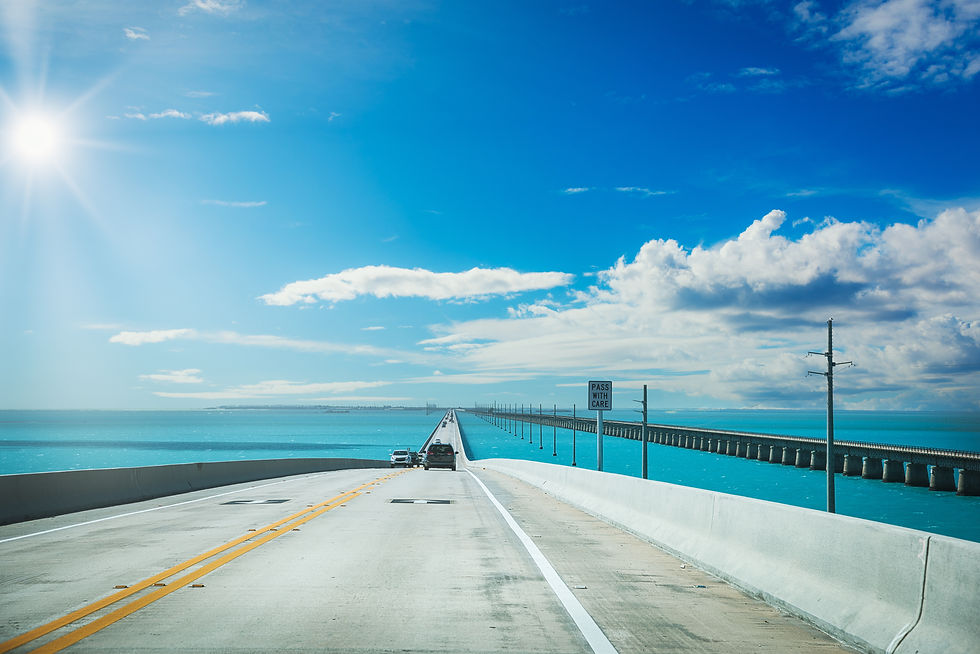
Image by Gabriele Maltinti / Adobestock
Ready for the Keys? Here’s Your Next Move
Once you’ve mapped your stops, packed smart, and set your pace, the drive is yours. The Overseas Highway offers a route that’s as much about the journey as the final destination. There’s no perfect plan. Some of the best stops are unplanned; a fruit stand that just opened, a fisherman who points out a shortcut, or a stretch of road that suddenly feels like your own.
Thousands make this trip each year, but no two drives are exactly alike. That’s the beauty of it. Plan well, stay flexible, and you’ll come home with more than pictures. You’ll have a string of stops that connect into something better than a timeline, they’ll feel like pieces of a road worth remembering.
By ML Staff. Images courtesy of Adobestock