


Ryan Gosling: Inside Project Hail Mary, A High-Stakes Sci-Fi Gamble That Delivers
- Apr 27
- 5 min read
Florida has become a center stage for modern space exploration, anchored by Kennedy Space Center, Cape Canaveral, and the broader Space Coast, where launches continue to shape the future of human spaceflight through NASA’s Artemis program. It is a landscape where science fiction and reality often feel closely connected, a theme recently explored in Miami Living’s guide on how to watch a rocket launch in Florida.

Against that backdrop, we thought Ryan Gosling in Project Hail Mary was a perfect cover for our latest issue.
Based on Project Hail Mary by Andy Weir, Project Hail Mary arrives as one of the most ambitious science fiction films of the decade, combining large-scale production with an unusually grounded, character-driven approach. Backed by Amazon MGM Studios and produced on a budget nearing $200 million, the 156-minute feature has quickly established itself as both a critical and commercial success.
The story follows Ryland Grace, played by Ryan Gosling, an astronaut who awakens alone aboard a spacecraft with no memory and a single directive: save Earth from extinction. As his memory gradually returns, he uncovers a mission centered on solving the mystery of a substance causing the sun to die, forcing him to rely on scientific instinct, improvisation, and ultimately, an unexpected connection that reshapes the journey.

The film pairs Gosling with a strong supporting cast including Sandra Hüller, Lionel Boyce, Ken Leung, and Milana Vayntrub, but much of the narrative rests squarely on Gosling’s shoulders, a risk the production embraced from the outset.
That confidence began early, when Gosling was first approached with the manuscript. Speaking to The Hollywood Reporter, he recalled, “I was given the manuscript for this by Andy Weir to both be in it and to produce… that’s a once-in-a-lifetime opportunity. I loved The Martian, but nothing could prepare me for this journey… I’ve never worked on something where I’m so confident that the story and the characters are great and that the audience is going to love it because it’s already been ‘stress-tested’ by the audience of book readers… I just knew if we could stay true to the book, that we would make a great film.” Recognizing the scale of the challenge, he moved quickly to assemble a top-tier team, adding, “My first thought was like, I needed to get a better producer than me involved… and I knew that Amy Pascal loomed large in her legend… so I approached her… and I was so lucky that she said yes.”
From there, the project evolved into a major studio undertaking, with Pascal producing alongside Gosling, and directing duo Phil Lord and Christopher Miller stepping in to guide the adaptation, with a screenplay by Drew Goddard. What began as a $3 million rights acquisition ultimately grew into one of the most expensive productions in the studio’s history.
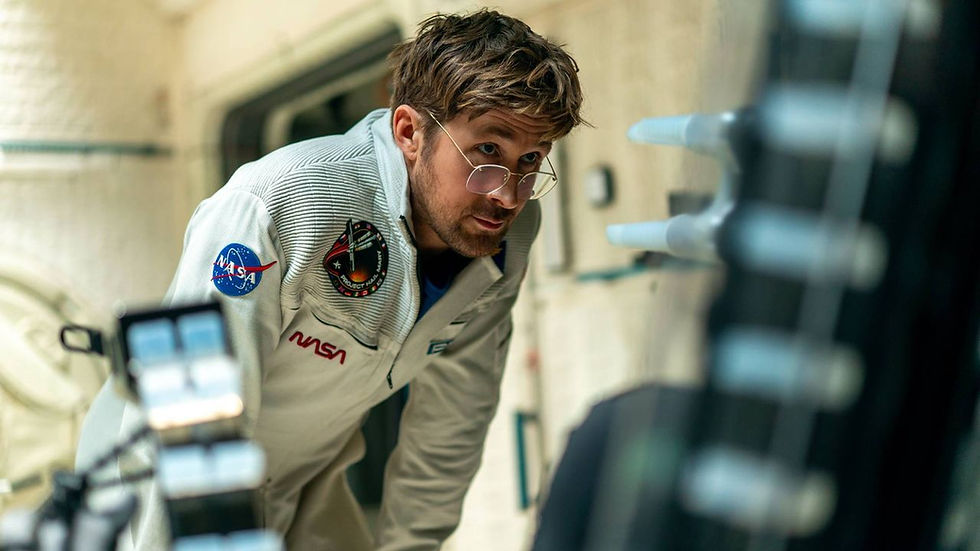
Time, both as a narrative device and a thematic force, runs through every frame of Project Hail Mary, extending beyond the script into a real-world partnership. Throughout the film, Gosling wears the TAG Heuer Connected Calibre E5 (www.tagheuer.com/tag-heuer-connected-calibre-e5/collection-connected.html) as part of his character’s mission aboard the spacecraft, where it appears during moments of analysis, experimentation, and decision-making.
Encased in titanium with a vivid red strap, the watch reinforces the film’s emphasis on precision and scientific discipline in an environment where every second carries consequences. Alone in space, with limited resources and no human contact, time becomes both an ally and an adversary, and the watch serves as a subtle reflection of that constant pressure within Grace’s isolated reality.
The connection is also rooted in Gosling’s long-standing relationship with TAG Heuer, where he has served as an ambassador since 2021. Rather than functioning as a simple product placement, the partnership reflects a shared emphasis on innovation, resilience, and pushing boundaries. In Project Hail Mary, that alignment feels organic, with the timepiece echoing the film’s core tension between scientific precision and human emotion. It becomes part of the storytelling itself, subtle but purposeful, mirroring a narrative where technology is not just a tool, but a lifeline.

In Project Hail Mary, Ryan Gosling wears the TAG Heuer Connected Calibre E5, a smartwatch that reflects the film’s focus on science and precision. It features a titanium case, black DLC coating, ceramic bezel, and a red rubber strap. The watch is part of Ryland Grace’s routine, appearing during analysis and decision-making scenes, reinforcing the importance of time and measurement. The model combines Swiss watchmaking with digital functionality. Learn more at www.tagheuer.com
Despite its scale, Project Hail Mary takes a notably different approach from most modern sci-fi blockbusters. Rather than relying heavily on greenscreens, the filmmakers prioritized physical sets and real-time interaction, a decision that shaped both the film’s aesthetic and performances. Miller explained the philosophy in an interview with ComicBook.com: “What’s fun about the movie is that there is no greenscreen in the movie whatsoever. Not a single green- or bluescreen was used. The whole ship was built as a set from the inside… The alien character Rocky was really with us at all times. And so, that’s what makes it feel real and makes it feel natural.” He added that even exterior sequences were designed to preserve authenticity: “When Ryan is outside on the hull of the ship, we shot him in front of a black background for space… which allowed for truer interactive light on him than a green screen would.”

That commitment to realism extends to one of the film’s most memorable elements, Rocky, an alien character brought to life through a blend of puppetry and visual effects. Theater artist James Ortiz performed Rocky on set using a detailed puppet, delivering lines live so Gosling could respond naturally. The performance proved so effective that Ortiz’s voice was ultimately retained in the final cut, reinforcing the emotional core of the film. While visual effects studios including Industrial Light & Magic and Framestore handled large-scale space environments and select animated sequences, the production consistently grounded its most important interactions in practical performance.
The result is a film that leans less on spectacle and more on ideas, something critics have been quick to note. Nicholas Barber of BBC described it as “a surprisingly shiny and fun story about the potential extinction of the human race,” adding that the filmmakers “have filled it not with action, but with mind-stretching concepts, painstaking laboratory research and knotty technical puzzles… To do all that and keep things zippily entertaining throughout is an extraordinary achievement.”
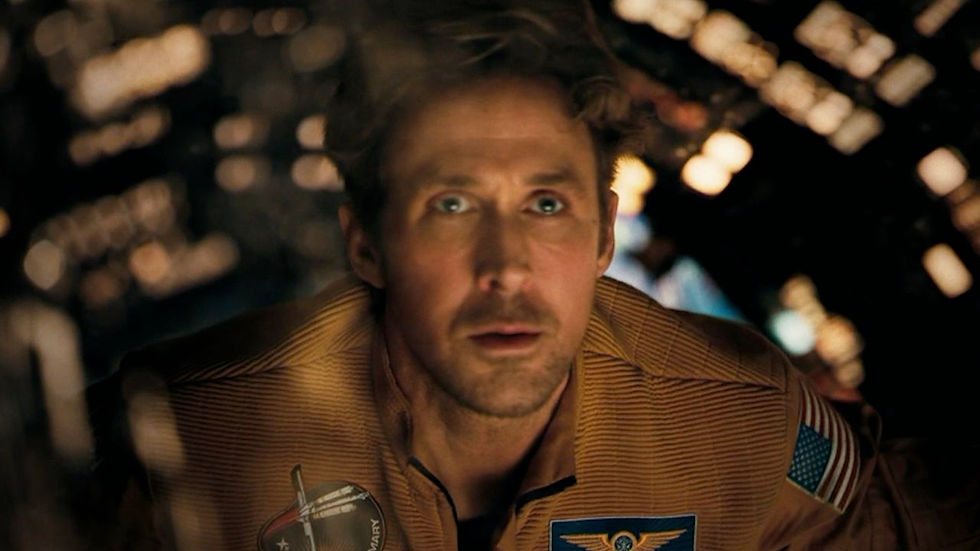
Audiences appear to agree. Project Hail Mary has reportedly surpassed $300 million at the global box office, positioning it among the top-performing Hollywood releases of 2026 so far and marking a major success for Amazon MGM Studios. The film is currently available to stream on Amazon Prime Video, with additional access through digital platforms including Apple TV.