


RGS Europe: A Spanish Legacy Arrives in South Florida

Spanish architectural millwork and interior design firm RGS Europe has established its U.S. headquarters in Coral Gables, with an initial investment of approximately $8 million and plans to pursue projects valued at up to $15 million. Founded in Galicia, Spain, more than five decades ago, the company has grown from a small woodworking business into an international operation with projects in over 60 countries, specializing in custom interiors for residential, hospitality, retail, and commercial properties.
The Miami expansion comes amid growing demand for customized interiors that integrate architectural design, materials, and technology. In an exclusive interview with Miami Living Magazine, Santiago Agardy, CEO of RGS Europe in the United States, discussed the company's history, its expansion into South Florida, the challenges of custom manufacturing, and his perspective on Miami's evolving design industry.
Luxury Legacy
RGS Europe's origins date back to a woodworking workshop established by Ramón García and his wife in Santiago de Compostela, Spain. An early partnership with Zara, the fashion retailer founded by Amancio Ortega, helped shape the company's growth as it manufactured and installed stores during the brand's international expansion.
Over time, RGS Europe expanded beyond retail into residential, hospitality, and commercial projects. Today, the company employs more than 1,000 people and operates manufacturing facilities in Spain and Mexico, producing everything from custom furnishings to extensive architectural interiors.
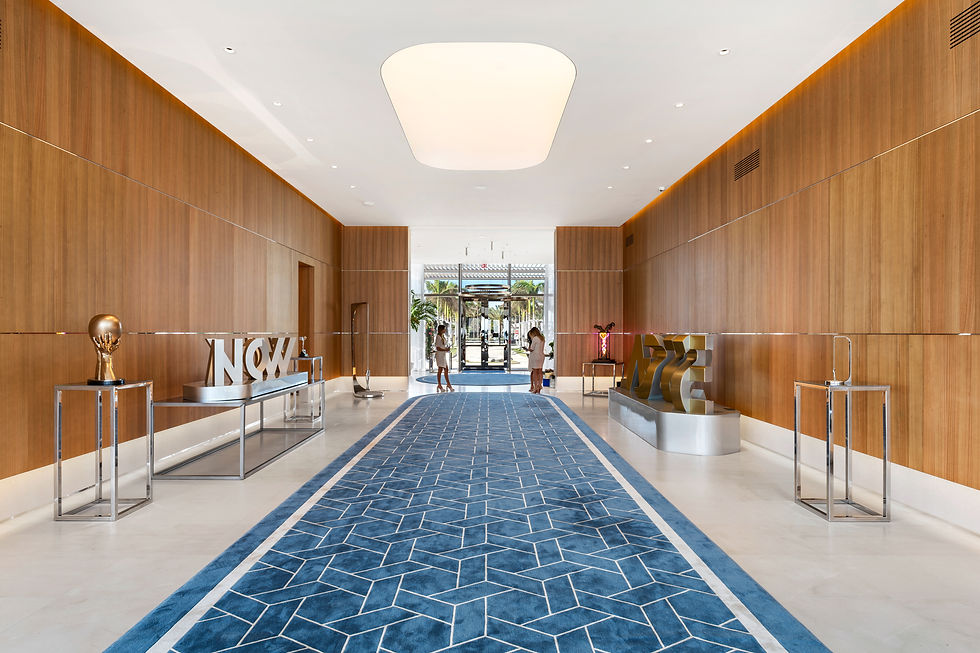
In South Florida, RGS Europe has contributed custom millwork and furnishings to Fendi Château Residences and The Ritz-Carlton Residences, Sunny Isles Beach. Its international portfolio includes Epic Marbella, Radisson Blu Aruba, St. Regis Aruba, Ritz-Carlton and St. Regis Turks & Caicos, Waldorf Astoria Costa Rica, and VIP areas at Madrid's Santiago Bernabéu Stadium.
Artisan Craftsmanship
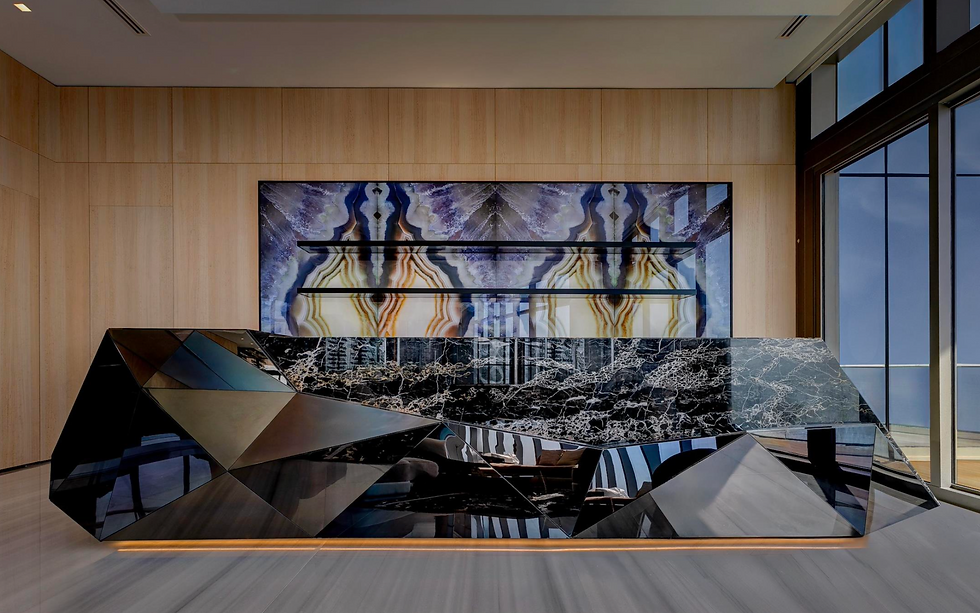
Architectural millwork involves creating custom wood elements such as wall panels, doors, cabinetry, and built-in furniture designed for specific spaces. RGS Europe combines traditional woodworking techniques with advanced manufacturing technology to produce architectural components that meet the precision and design requirements of residential, hospitality, and commercial projects.
The company's work also extends to experimental designs, including Vessel, a sculptural wooden bathtub inspired by naval architecture that received recognition at Marbella Design & Art in 2022. The project demonstrates how traditional woodworking can be applied to unconventional forms and contemporary design.
Custom Creations
Developing highly customized interiors requires balancing design, technical requirements, budgets, and construction schedules. RGS Europe addresses these challenges through its Design Assist and Value Engineering services, working with architects and interior designers to evaluate materials, manufacturing methods, and installation requirements while identifying cost-effective solutions that preserve the original design.
The company also incorporates sustainability practices into its manufacturing operations, including sourcing wood from managed European forests, supporting reforestation efforts, and requiring supplier certifications.

Miami Expansion
RGS Europe's new Coral Gables headquarters strengthens its presence in South Florida, where the company has already contributed to several residential developments. The office will facilitate collaboration with local architects, interior designers, and developers while improving coordination throughout the design, manufacturing, and installation process.
The location will also serve as a base for the company's broader U.S. expansion, marking another milestone for a business that began as a family woodworking workshop in northern Spain and has grown into an international architectural millwork and interiors firm.
santiago agardy
Santiago Agardy, CEO of RGS Europe USA, shares his perspective on Miami's design industry, the relationship between technology and traditional craftsmanship, changing expectations in luxury interiors, and the experiences that have influenced his career.
Miami Expansion & Growth
Miami Living: Why did RGS Europe choose Coral Gables for its U.S. headquarters, and what opportunities do you see in Miami and South Florida?
Santiago Agardy: Miami was a natural starting point for our expansion into the United States. I had spent years working in construction in South Florida, so I knew the market firsthand and understood the needs of architects, designers, and developers. Through my work as a builder, I also became familiar with RGS Europe and the capabilities of its team in Spain.
What I saw was an opportunity to bring a level of customization, technical expertise, and integrated execution that was not always easy to find in the U.S. market. Miami has undergone an extraordinary transformation, with a sophisticated international clientele and a community of architects and interior designers who have helped establish the city as an important destination for high-end design.
Coral Gables gives us a base from which to work more closely with local professionals and clients. We see Miami as the starting point for our growth in the United States, with plans to explore other strategic markets, including Las Vegas and California.
Miami Living: How do Miami's architects and interior designers differ from those in other international markets?
Santiago Agardy: I would not say that Miami's architects and designers are necessarily different in terms of talent. What makes this market distinctive is the diversity of its clients, their cultural backgrounds, and their expectations. Miami is a melting pot, bringing together people from all over the world, and that creates a very interesting environment for design.
I have also noticed a strong demand for individuality. Clients in the luxury market want something distinctive, something that cannot simply be purchased from a catalog. They want their homes and commercial spaces to reflect their own identity.
Another difference is the pace. Compared with some of the other markets we know, there is a greater sense of urgency in Miami. Clients often want projects completed as quickly as possible, so managing expectations, technical development, production, and delivery is especially important.
Miami Living: What types of projects are you most interested in pursuing as RGS Europe expands across South Florida and the rest of America?
Santiago Agardy: We want to focus on high-end projects where customization is essential and where our technical and manufacturing capabilities can make a real difference. That includes luxury residences, penthouses, hospitality projects, boutique hotels, restaurants, commercial spaces, and selected retail developments, as well as specialized projects such as unique yachts.
We are not a conventional manufacturer producing standard kitchens or closets in large quantities. We are particularly interested in projects where architects, designers, and clients have a clear vision and need a partner capable of turning that vision into reality.
We also want to work with professionals from the earliest stages of a project. Through services such as Design Assist and Value Engineering, we can help evaluate technical solutions, address challenges, and optimize costs while preserving the original design intent. Our goal is to build long-term relationships with designers and developers, rather than simply complete a single transaction.
Design & Craftsmanship
Miami Living: RGS Europe helped build Inditex's global retail presence. What lessons from that experience still influence the company today?
Santiago Agardy: RGS Europe began around 50 years ago as a small family carpentry workshop in Santiago de Compostela, Galicia. One of the defining moments in its history was the relationship with Amancio Ortega and the early development of Zara. The company built the first Zara store and, as the business grew, RGS Europe grew alongside it, eventually supporting the brand's international expansion. We continue to work with Inditex today.
That experience helped the company develop the ability to deliver projects at scale while maintaining consistency and quality. It also demonstrated the importance of trust and long-term relationships. The growth was not simply about manufacturing more; it required investing in infrastructure, technology, logistics, and people to meet increasingly demanding requirements.
Those lessons continue to influence the way we work. Today, we apply that industrial experience across residential, hospitality, restaurant, and commercial projects, combining large-scale capabilities with the flexibility required for highly customized work.
Miami Living: With so much technology available, which traditional craftsmanship techniques remain irreplaceable?
Santiago Agardy: Technology is essential to what we do. Our factories use advanced equipment, including CNC machinery, laser technology, computerized controls, and robotic painting systems. These tools are extremely effective for precision cutting, repetitive tasks, and achieving consistency.
But technology cannot replace every part of the process. When a project requires a unique piece, an organic shape, intricate carving, or a finish that must be perfected by hand, the experience of a skilled craftsperson becomes indispensable. A wooden bathtub designed specifically for one client, for example, is not something that can simply be produced by running a machine.
At RGS Europe, we often describe ourselves as artisans with the greatest industrial capacity in the world. For me, that combination is what makes the company special. We continue to invest in new technology while preserving traditional skills and the knowledge passed down through generations. You can find grandparents, parents, and children working in the same factories, carrying on a craft while adapting it to contemporary design.
Miami Living: What changes are you seeing in what luxury homeowners and developers want from their interiors?
Santiago Agardy: One of the most significant changes is the growing importance of customization and visual continuity. In the past, a homeowner might purchase a kitchen from one company, closets from another, and wall panels from a third. The challenge was making all those elements work together as one coherent design.
Today, clients and designers increasingly want the entire space to tell a single story. They want the kitchen, closets, doors, wall panels, finishes, and other architectural elements to share a consistent aesthetic. At the same time, they want something distinctive that cannot be replicated simply by choosing products from a catalog.
Luxury clients are often willing to invest in a unique piece because they want something nobody else has. Developers, on the other hand, also have to consider budgets and value engineering. Our experience allows us to work with both perspectives: helping bring ambitious designs to life while identifying technical alternatives when a project needs a more efficient solution.
Personal Perspectives
Miami Living: What first attracted you to the world of architecture and design?
Santiago Agardy: What first attracted me was the ability to take an idea and turn it into something real. There is something very rewarding about starting with a concept and watching it evolve into a physical space, seeing how all the different elements come together and how the original vision is ultimately brought to life.
Having spent much of my professional life in construction, I have come to appreciate not only the creative side of architecture and design, but also the technical knowledge, craftsmanship, and coordination required to execute it properly. For me, that combination of creativity and execution is what makes this industry so interesting. You are not simply building a space; you are helping bring someone's vision to life.
Miami Living: Is there a particular building, designer, or place that has had a lasting influence on your personal taste?
Santiago Agardy: I would not say there is one particular building or designer that has defined my taste. Traveling throughout Europe and South America has given me the opportunity to experience very different architectural styles, materials, proportions, and ways of approaching design. Each place has something unique to offer, and I think those experiences naturally influence the way you see things.
What I appreciate most is the ability of architecture to reflect the culture and character of a place. I am drawn to spaces that feel authentic, where the materials, details, and proportions work together naturally. I also appreciate timeless design, something that can remain relevant and beautiful long after trends have changed. Ultimately, I think personal taste develops over time, through the places you visit, the people you meet, and the experiences you accumulate.
Miami Living: When you're not working, how do you like to spend your time in Miami? Have you discovered a favorite local spot?
Santiago Agardy: One of the things I enjoy most about living in Miami is the lifestyle and the variety it offers. It is a very international city, with an incredible mix of cultures, restaurants, architecture, and places to explore. At the same time, being surrounded by the water and having such beautiful weather makes it easy to enjoy the outdoors and disconnect from the pace of business.
When I am not working, I enjoy spending time with family and friends, traveling, and discovering new places. I think maintaining that balance is important, particularly in a demanding industry. Miami is a city that is constantly evolving, and one of the things I appreciate about it is that there is always something new to discover, whether it is a new neighborhood, a restaurant, or simply a different way to enjoy the city.
RGS Europe — Miami Office & Showroom
350 S Dixie Hwy, Coral Gables, FL 33133
Website: rgseurope.com