


October 1 in Miami History: Selling the Everglades and Surviving the Great Hurricane
October 1 has quite a few interesting historical happenings. On this date, Yosemite National Park was established in 1890, the first modern World Series game was played in 1903, Ford introduced the Model T in 1908, future President Jimmy Carter was born in 1924, American Express introduced its first U.S. credit card in 1958, Johnny Carson began his historic run as host of The Tonight Show in 1962, and Walt Disney World officially opened in Orlando in 1971.

Dredging a canal in the Everglades, Florida Florida Memory (N028658, public domain). Photo/Courtesy NPS.
And here in Miami, we found an interesting South Florida historical connection. On October 1, 1909, real-estate speculation in the Everglades was beginning to take off, while 17 years later, on October 1, 1926, the aftermath of the Great Miami Hurricane revealed an economic and environmental crisis that profoundly affected South Florida.
Selling the Everglades
The Everglades Land Sales Company opened its Miami office on October 1, promoting Everglades land to buyers around the country, many of whom purchased property without seeing it first. The University of Miami's historical chronology specifically records the date, making the company an early example of the speculative real-estate culture that would become a defining feature of South Florida.

A group of VIPs inspects Everglades dredge work, 1907 Florida Memory (N027123, public domain). Photo/NPS
Based in Kansas City, the company reportedly owned about 26,000 acres in the Davie area by 1911, while its promotional literature claimed that 224,000 acres had been "disposed of under the company's auspices." The company promoted the idea that drainage would transform the Everglades into productive farmland. But drainage proved considerably more complicated than some promotional material suggested, and some purchasers encountered land that had not yet been adequately reclaimed.
The company eventually commissioned hydraulic engineers to examine the drainage plans and was reorganized or merged into the Everglades Land and Sugar Company around 1913.

1909 map of South Florida from the State of Florida report Report on the Drainage of the Everglades of Florida, by J. O. Wright, Supervising Drainage Engineer. Courtesy of Dr. Gary Goforth.
The Great Hurricane
About 17 years later, the Great Miami Hurricane delivered another major blow to South Florida. The hurricane struck Miami on September 18, 1926, but its destruction was carefully documented from the air in photographs taken on October 1, just 13 days later.

The storm reached Category 4 strength and produced a devastating storm surge, estimated at around 14 feet in parts of the Miami area. The American Red Cross reported 373 deaths and 6,381 injuries, while more than 800 people were initially reported missing. Because South Florida had a large transient population at the time, the exact death toll remains uncertain. Approximately 25,000 people were left without shelter, and the Library of Congress estimates that about 4,700 homes were destroyed.
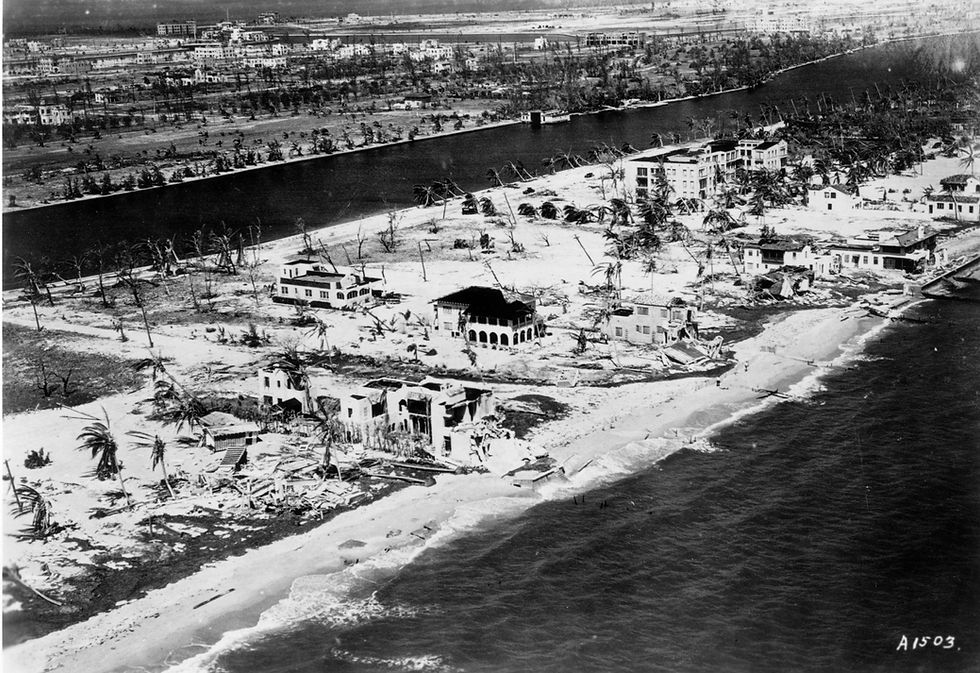
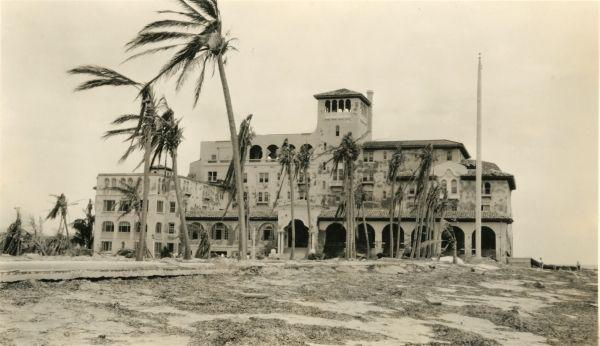
Pancoast Hotel in Miami Beach after the 1926 Hurriance
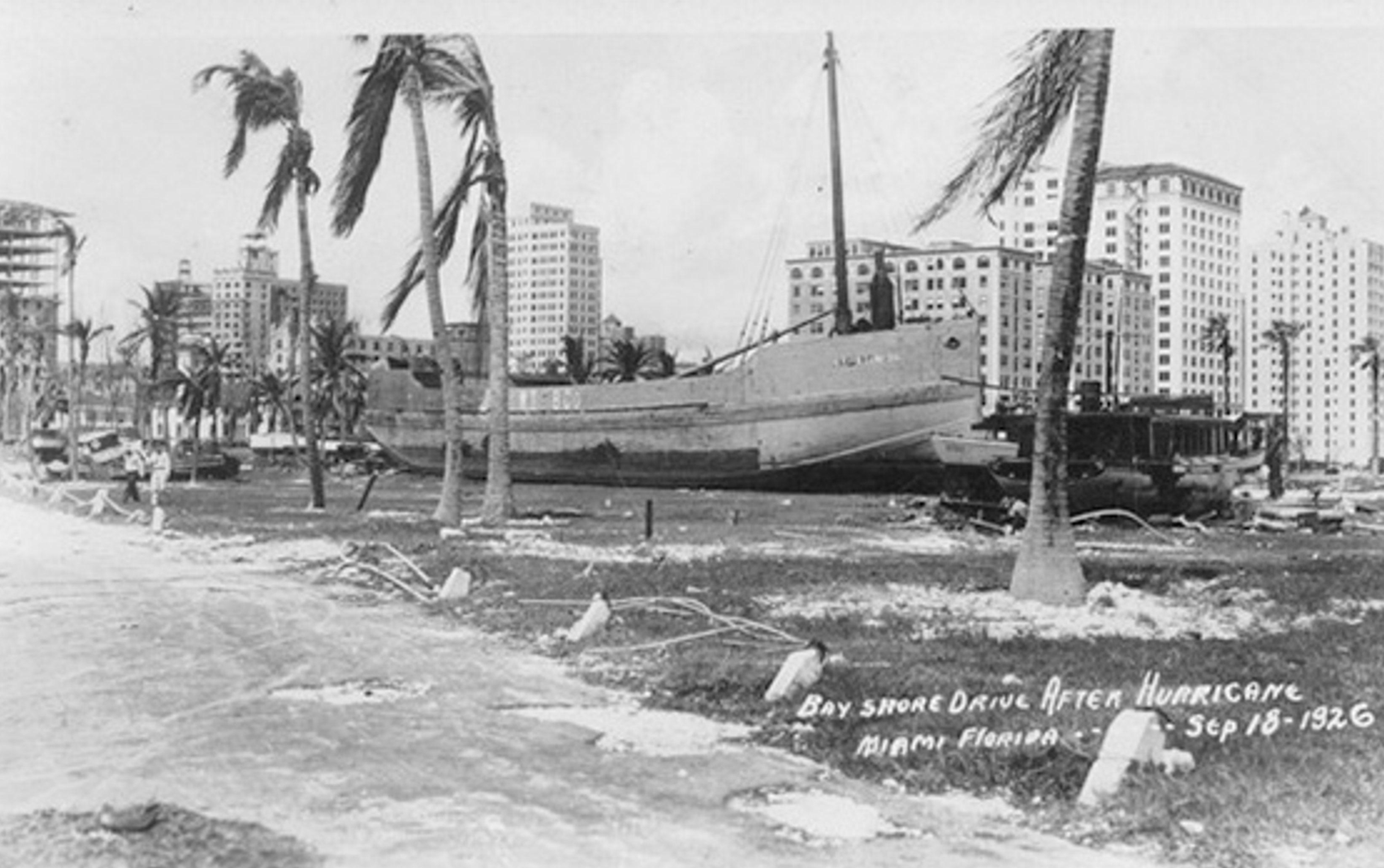
Miami 1926. Photos/weather.gov
One particularly frightening feature of the storm was the eye. When it passed directly over the Miami area, the winds temporarily subsided. Some people went outside believing the hurricane was over, only to be caught when the second half of the storm arrived from the opposite direction.
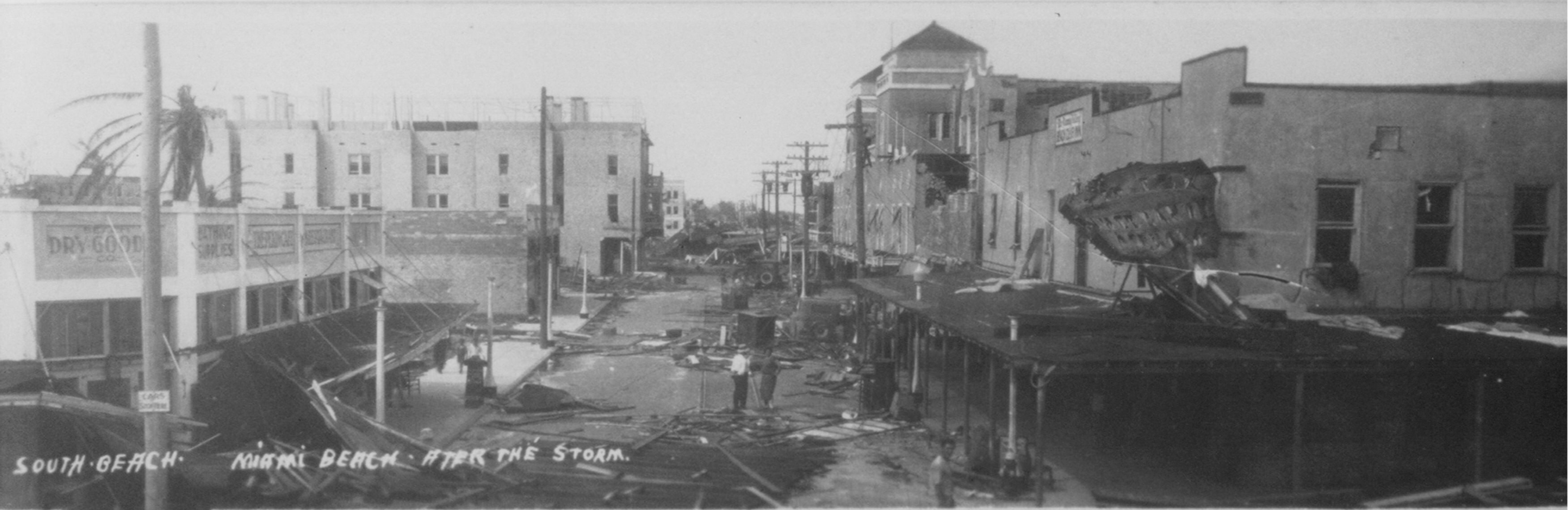
South Beach, 1926
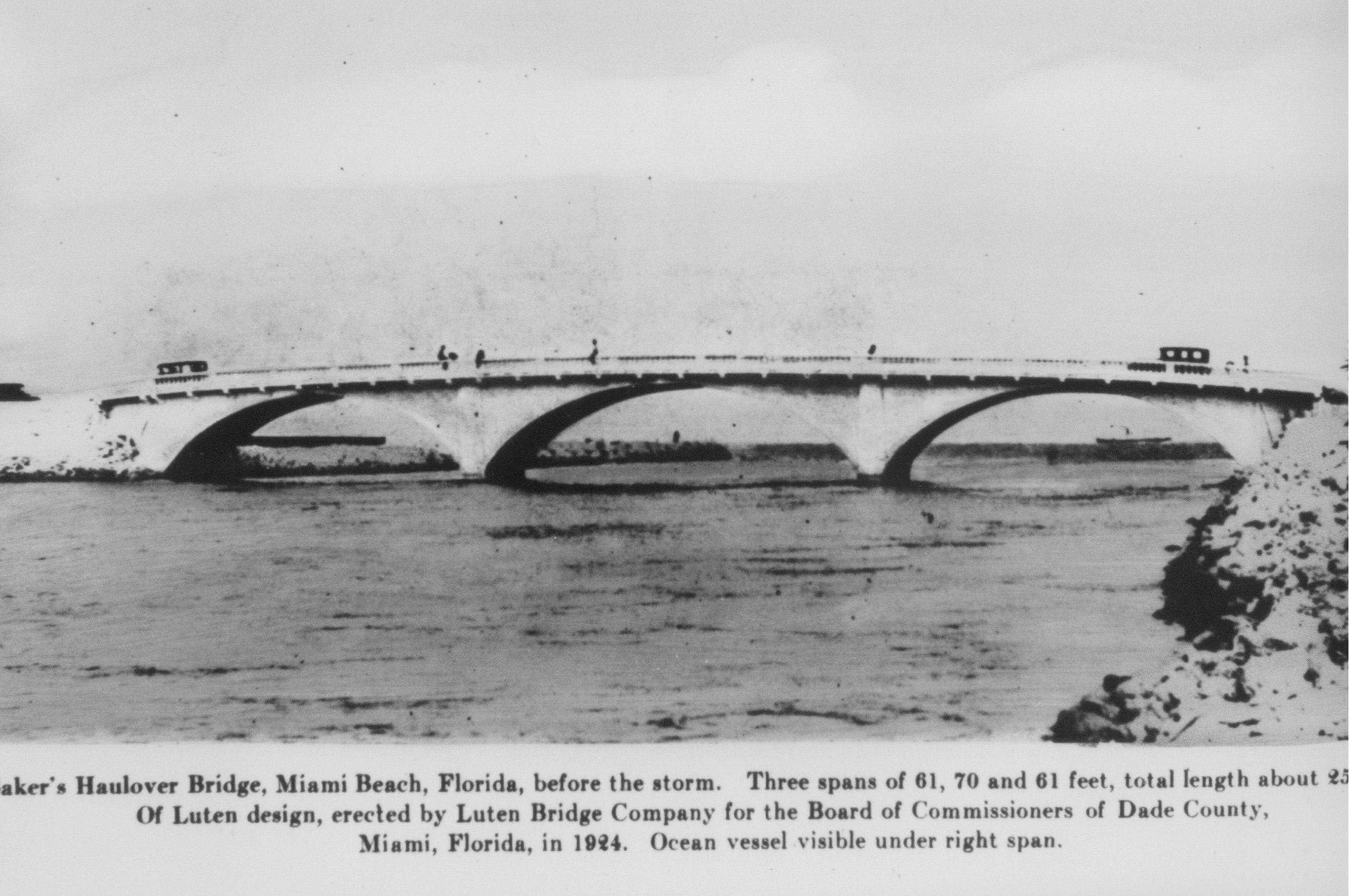
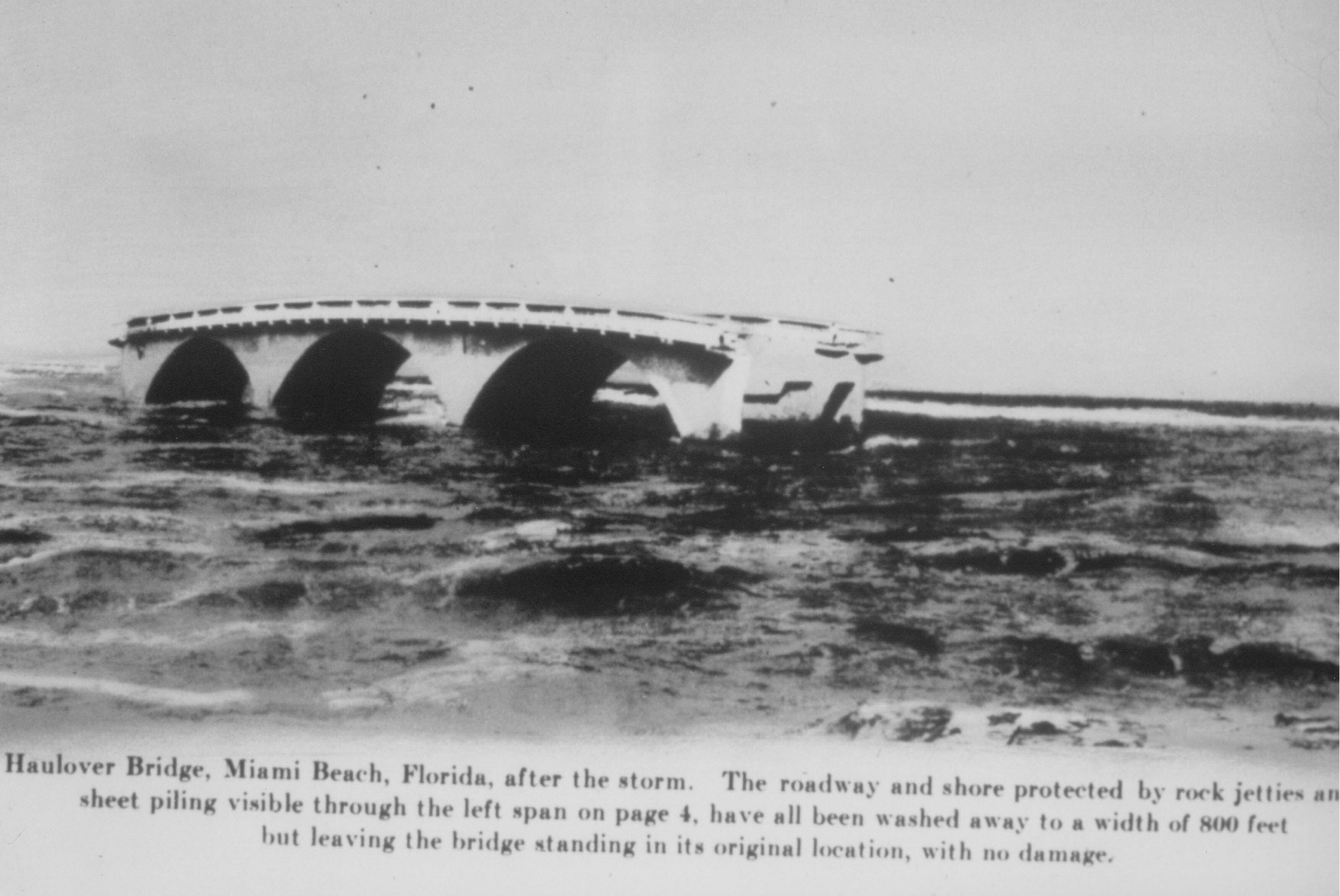
Haulover Bridge before and after the hurricane, 1926. Photos/weather.gov
A Second Blow to Miami
The Great Hurricane also hit a South Florida economy that was already in trouble. This is important: the hurricane did not single-handedly cause the collapse of the Florida land boom. The boom was already suffering from over-speculation, transportation problems, financial difficulties and a shortage of building materials. The hurricane delivered an enormous additional blow, and the National Park Service describes it as the "coup de grace" to an already weakening boom.
In many ways, these two October 1 stories capture something fundamental about Miami's history: the extraordinary ambition to transform South Florida, and the equally powerful forces of nature and economics that have repeatedly tested that ambition.