


Nationwide Push for Mandatory In-Car Alcohol-Detection Tech
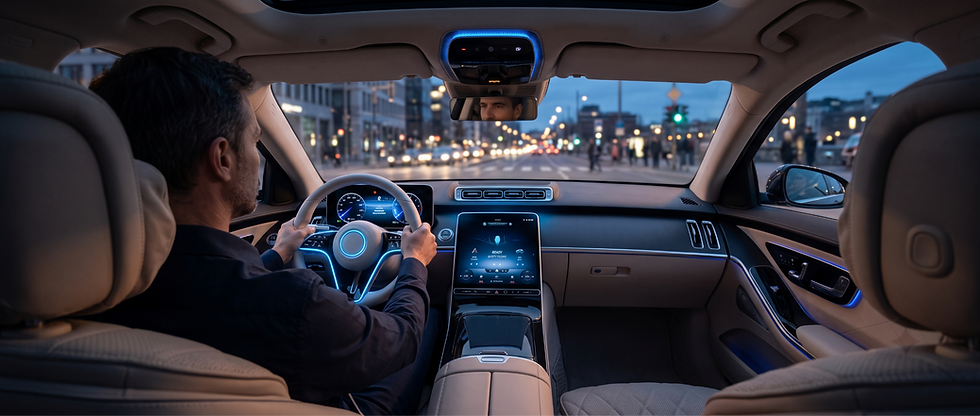
Drunk driving still kills more than 10,000 people in the United States every year, and Washington has decided the next line of defense should be built directly into the dashboard. A federal mandate is moving through the regulatory pipeline that could eventually require every new car sold in America to come equipped with technology that senses driver impairment before the vehicle ever leaves the driveway. For a country that logs billions of road-trip miles a year, from weekend getaways to daily commutes, the idea of a car that can quietly refuse to start for an impaired driver marks one of the biggest shifts in automotive safety culture in decades.
A Federal Mandate Years in the Making
The push traces back to Section 24220 of the Infrastructure Investment and Jobs Act, signed into law in November 2021. Often referred to as the HALT Act, the provision instructs the National Highway Traffic Safety Administration to develop a new Federal Motor Vehicle Safety Standard requiring passive systems that can identify an impaired driver and limit or prevent the vehicle from operating.
NHTSA missed its original three-year deadline for finalizing the rule. Instead, the agency published an Advance Notice of Proposed Rulemaking, opening the technology, its accuracy, and its privacy implications up to public comment. As of 2026, no final safety standard has been adopted, and the rulemaking remains under review as regulators sort through feedback from automakers, safety advocates, and civil liberties groups. Once a standard is finalized, manufacturers would still be given several years to phase the technology into new vehicle lineups, meaning most drivers won't see it under the hood immediately.
How the Technology Actually Works
Unlike the machines most people picture when they hear the word "breathalyzer," the systems being developed under this mandate are designed to work in the background. The Driver Alcohol Detection System for Safety research program, a joint effort between automakers and federal regulators, has spent years refining two main approaches, detailed in NHTSA's reports to Congress on the technology.
The first is a breath-based sensor built into the cabin that measures alcohol concentration as the driver breathes normally, without requiring a forced breath sample into a tube. The second is a touch-based sensor, embedded in a start button, gear shift, or steering wheel, that uses infrared light to estimate blood alcohol content through the skin in a matter of seconds. Both are designed to be invisible during everyday driving and to activate only when alcohol is detected above the legal limit.
Not the Same as a Court-Ordered Breathalyzer
It's worth separating this emerging nationwide standard from the ignition interlock devices that courts already order for people convicted of DUI. Those systems have existed for years, require an active breath sample before and during a trip, and are installed as a condition of sentencing rather than a factory feature. Drivers who are curious about how that process works, who qualifies, and how long a device typically stays installed can find a detailed breakdown in this guide on whether a breathalyzer device gets installed in your car after a DUI.
Automakers and Advocacy Groups Are Divided
Support for the mandate has come largely from traffic safety organizations, who argue that passive detection technology could prevent thousands of deaths a year once fully deployed. Automakers have generally supported the research phase but have pushed back on firm deadlines, citing concerns about reliability, cost, and how the technology performs across different body types and environmental conditions.
Critics, including some lawmakers and civil liberties groups, have raised questions about data privacy and government overreach, worried about who has access to information collected by a system built into every car. Congress itself has revisited funding for the rule more than once, though efforts to strip its funding have so far failed to gain enough support to move forward.
What It Could Mean for Drivers Nationwide
For now, the technology remains in development, and the rule remains unfinished, so no driver needs to worry about a factory-installed sensor in their next vehicle purchase just yet. But the direction is clear: federal regulators, automakers, and safety advocates are actively working toward a future where impairment detection is standard equipment rather than a court-ordered add-on.
Travelers renting cars, families shopping for a new vehicle, and anyone tracking how road safety policy is evolving should expect to hear more about this technology in the coming years, especially as NHTSA moves closer to a final rule. Until then, the existing patchwork of state DUI laws and court-ordered interlock devices remains the primary tool for keeping impaired drivers off the road, with the nationwide push serving as the next chapter rather than a replacement.