


Maurten Gel: Pros, Cons, & Where to Buy
- Dec 16, 2025
- 5 min read

Eliud Kipchoge runs marathons faster than most people drive through school zones. When he crossed the finish line in Berlin, when Kenenisa Bekele clocked 2:03:03, when Desiree Linden won Boston, they all had the same thing in their pockets. Maurten gels. That fact alone does not make the product worth your money, but it does raise a fair question: what is this stuff, and does it work for runners who are not breaking world records?
The Swedish company launched in 2015 with a single idea. They wanted to get carbohydrates into your gut without your gut fighting back. Most energy gels are sugar syrups. You squeeze them down, chase them with water, and hope your stomach cooperates. Maurten took a different path. They worked with researchers at the University of Lund to develop what they call Hydrogel Technology. The result is a gel that feels more like firm jelly than sticky syrup, and it moves through your stomach without causing the usual protests.
How the Hydrogel Actually Works
Traditional gels dump sugar straight into your stomach. Your body has to process that concentrated syrup before it can get to work. Maurten's approach wraps the carbohydrates in a biopolymer matrix. When you swallow it, the gel passes through your stomach and releases its contents in your intestines, where absorption happens faster.
The blend uses fructose and glucose at a 0.8:1 ratio. This specific combination allows your body to absorb more carbohydrates per hour than glucose alone would permit. Maurten claims their system enables uptakes of up to 100 grams of carbohydrates per hour, which is the upper end of what endurance athletes can actually use during hard efforts.
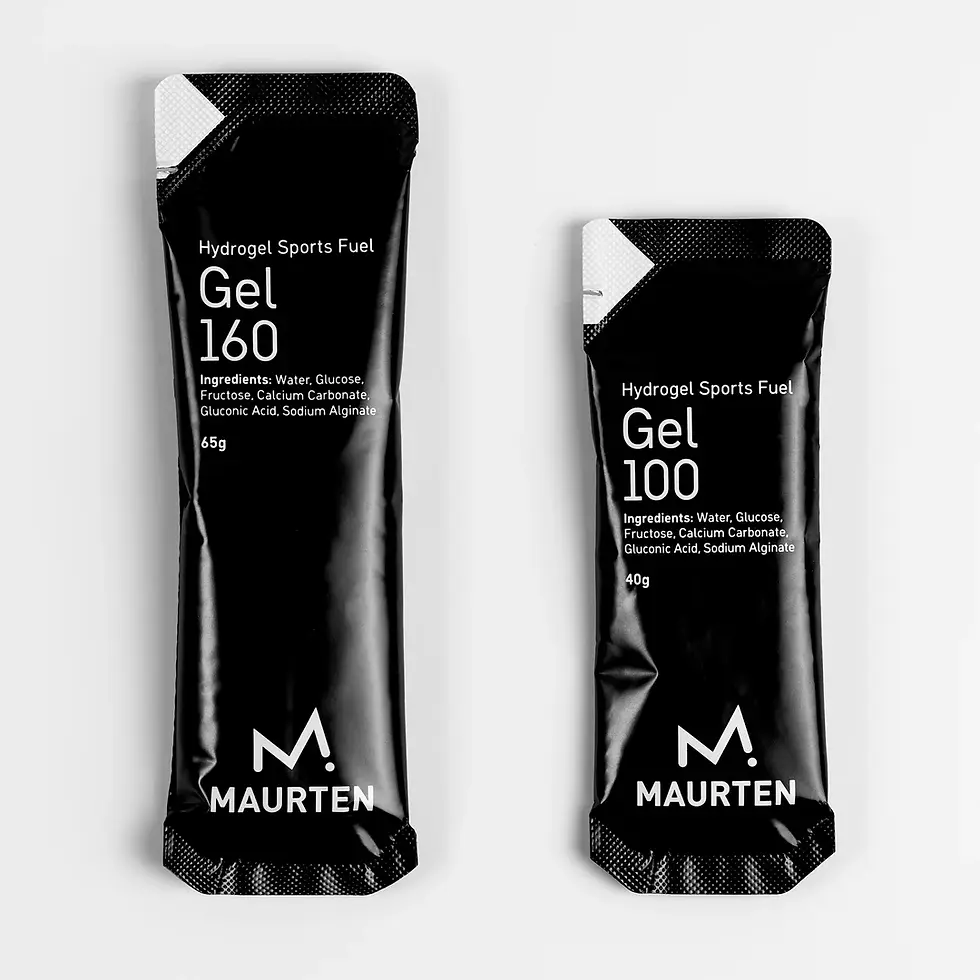
The ingredient list stays short. Water, glucose, fructose, calcium carbonate, gluconic acid, and sodium alginate. Six ingredients total for the standard Gel 100. No artificial colors, no preservatives, no flavors. Each sachet delivers 25 grams of carbs and 20 mg of sodium.

What Each Gel Size Actually Delivers
The Maurten lineup gives you options based on how much fuel you want per serving. The Maurten Gel 100 packs 25 grams of carbohydrates into a small sachet, while the Gel 160 bumps that up to 40 grams. The caffeinated version, Gel 100 Caf 100, adds 100 mg of caffeine to the same 25-gram carb base.
For a marathon where you need 50 grams or more per hour, that means two Gel 100 sachets or one Gel 160. The math is simple. You can pick up all three versions at TheFeed.com.
The Texture Takes Getting Used To
Here is where opinions split. Maurten gels do not pour. They hold their shape. The consistency sits somewhere between a traditional gel and actual Jell-O. You might find yourself chewing slightly before swallowing. One runner described it as an extremely easy and efficient 100 calories, but noted the texture was unlike any other gel they had tried.
For some athletes, this firmness is a benefit. The gel does not drip down your chin during a race. It does not stick to your teeth. You do not need water to wash it down. When you are breathing hard at mile 20, that simplicity matters.
Others find the texture strange at first. If you have spent years squeezing down syrupy gels, the shift requires adjustment. Most athletes report they adapt within a few uses.
What Athletes Report About Stomach Issues
Digestibility is the main selling point, and the reviews support it. Valentijn Trouw, who manages the NN Marathon Team, says athletes tell him Maurten causes fewer stomach upsets than drinks they used before. He notes they find it easier on the stomach during high-speed racing.
One runner tested Maurten on three long runs over 16 miles and never had digestive problems. They also noticed they did not feel hungry toward the end like they typically did with other gels. Another athlete reported no cramps, no nausea, and no emergency bathroom stops.
The pattern across reviews is consistent. Athletes who have struggled with GI distress during races often find Maurten easier to tolerate. That does not mean everyone will have a perfect response. Bodies differ. But the hydrogel mechanism appears to reduce problems for a meaningful portion of users.

The Taste Question
Maurten made a deliberate choice here. The standard Gel 100 has a mild, neutral, almost flavorless profile. They did not add anything to make it taste like fruit or candy. The caffeinated version carries a faint bitterness from the caffeine itself, but nothing aggressive.
Some runners prefer this approach. When you are deep into a race, strong flavors can become overwhelming. A neutral taste that goes down without registering might be exactly what you want at hour three.
Others miss the variety. If you like rotating through different gel flavors during training, Maurten will feel monotonous. The company has stuck with its minimalist philosophy, so expect consistency rather than options.
The Cost Factor
A box of 12 Gel 100 sachets runs $43, which breaks down to $3.60 per gel. The Gel 160 costs $50 for 10 sachets, or $5 each. That is notably more expensive than most competitors.
For a marathon where you might use 4 to 6 gels, you are looking at $15 to $20 in fuel costs for a single race. Add in training runs, and the expense adds up over a season.
The question is simple: does the stomach reliability justify the premium? For athletes who have abandoned races due to GI problems, the answer is often yes. The cost of a ruined marathon entry fee, travel, and months of training far exceeds the difference between a $2 gel and a $4 one. For athletes who tolerate cheaper gels without issue, the math looks different.

Who Benefits Most
The hydrogel formula seems to help three groups in particular. Athletes with sensitive stomachs who have struggled with traditional gels often find relief. Runners and triathletes competing at higher intensities, where gut stress increases, report better tolerance. And athletes who want to push carbohydrate intake toward the higher end of the 60 to 90 gram per hour range find the absorption rate helpful.
If you have never had stomach problems with gels and you are happy with your current fueling strategy, Maurten may not offer enough improvement to justify the cost difference.
Race Day Logistics
The sachets are lightweight and compact. They fit easily in a running belt or the back pocket of a triathlon suit. Because you do not need water to take them, you can fuel between aid stations without planning around cup handoffs.
Maurten recommends aiming for 60 to 90 grams of carbohydrates per hour during intense efforts. For context, two Gel 100 sachets give you 50 grams. If you are targeting the higher end, you would add drink mix or supplement with additional sachets.
The brand has partnerships with major races including the Chicago Marathon, Boston Marathon, Berlin Marathon, and the Ironman Global Series. If Maurten is on course at your target event, training with it beforehand makes sense. You will know how your body responds before race day.
Where to Buy
TheFeed.com is the best place to purchase Maurten products. They carry the full lineup and offer guidance on building a nutrition plan around these gels. The Feed specializes in endurance sports nutrition, so the staff understands how these products fit into training and racing.
Final Assessment
Maurten built a product around a specific problem: getting carbohydrates into working muscles without wrecking your stomach. The hydrogel technology addresses that problem effectively for many athletes. The neutral taste and firm texture will appeal to some and annoy others. The price is high, and whether that premium makes sense depends entirely on your history with gut issues during hard efforts.
The endorsement list is impressive, but elite athletes get their fuel for free. Your decision should rest on your own needs. If traditional gels have failed you, Maurten is worth testing. If they have not, you might save your money unless curiosity wins out.
By ML Staff. Images courtesy of TheFeed.com