


Curb Appeal in the Magic City: How Miramar Homeowners Keep Their Exteriors Looking New Year-Round
In a region where the light is this good and the architecture this photogenic, the outside of a home is doing a lot of work. It sets the tone before anyone reaches the front door. In southwest Broward, though, the climate is quietly working against that first impression every single day. The subtropical heat that makes our winters the envy of the country also gives algae, mildew, and grime the warmth they need to take hold fast. In a city like Miramar, keeping a home looking sharp comes down to understanding what the environment does to exterior surfaces and staying a step ahead of it.
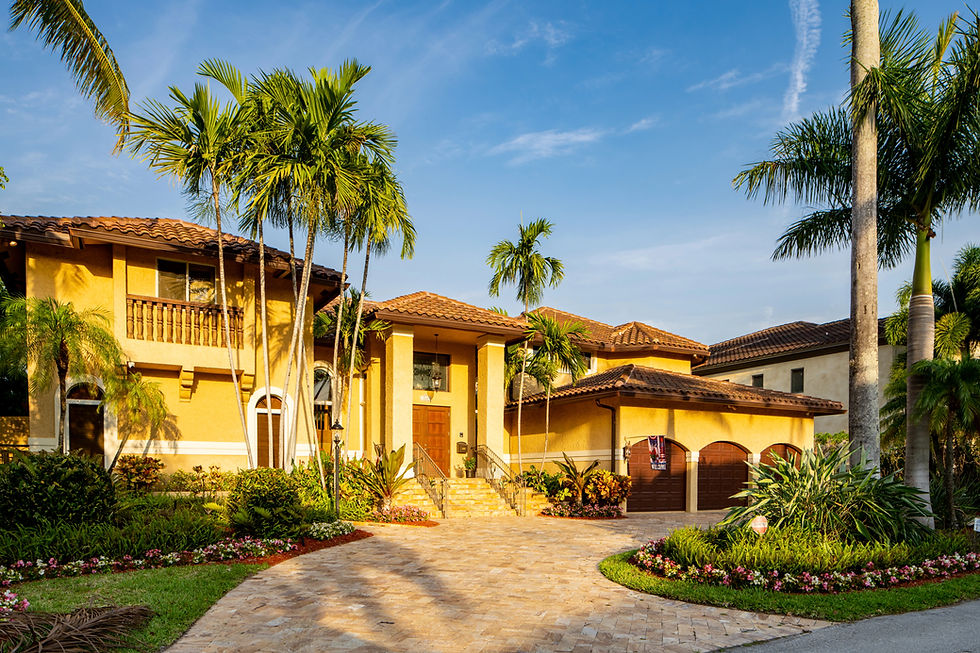
Image by DepositPhotos
Why Miramar Homes Get Dirty Faster Than Most
The Climate Sets the Stage
Start with the rain. Miramar sees roughly 60 inches of precipitation a year, well above the national average of about 38, concentrated in a distinct rainy season that runs from June through September. Pair that with relative humidity that sits in the low 70s for much of the year and a tropical monsoon climate that barely cools off, and you have a near-perfect greenhouse for biological growth.
What Those Black Streaks Actually Are
Those dark streaks that show up on so many South Florida roofs aren't dirt, soot, or tree residue. They're a hardy algae called Gloeocapsa magma, a cyanobacteria that spreads through airborne spores and feeds on the limestone filler in roofing materials. It thrives in exactly the conditions we live in, and because the spores travel on the wind, you'll often notice the same staining creep across several homes in a community within a season or two of each other. It isn't a sign of neglect. It's simply what our climate does.
It Doesn't Stop at the Roof
Roofs are only part of the story. The heavy summer downpours, the standing humidity, and the sheer volume of organic growth mean driveways develop mildew, pavers grow slick with buildup, and windows lose their clarity far faster than they would up north. The pattern holds whether you're in Miramar's older east-side neighborhoods, where ranch-style homes carry decades of weathering, or in the newer master-planned communities west of I-75. Left unattended, the buildup only worsens.
The Roof Question Is Bigger in Miramar Than Most Places
A Mix of Roof Types, One Common Weak Point
Miramar's housing stock runs the full range, from flat decks and asphalt shingle to the clay and concrete barrel tile that crowns so many estate homes in communities like Sunset Lakes, Monarch Lakes, and Silver Shores. That tile is beautiful, and it's a South Florida signature. It's also unforgiving of the wrong cleaning approach.
Many of these communities were built around the late 1990s and early 2000s, which means a large share of the area's barrel-tile roofs are now reaching their first major maintenance cycle. Tile roofs are designed to shed water onto an underlayment beneath the surface, and that underlayment is exactly what degrades over time.
High-pressure washing makes things worse. On tile it can crack or dislodge pieces and force water where it shouldn't go. On shingle it strips the protective granules and can void the manufacturer's warranty, which is no small thing in a High-Velocity Hurricane Zone where roofing specifications are already strict.
Why Soft Washing Is the Safer Choice
This is why professionals across Broward rely on soft washing for roofs and other delicate surfaces. Soft washing uses low pressure paired with specialized cleaning solutions that break the growth down at the root, so it stays gone longer than it would after a quick surface rinse. Pressure washing still has its place on hardy surfaces like concrete driveways and sidewalks. For homeowners who would rather not risk the wrong technique on a tile roof they'd like to keep for decades, a local company like KDH Pressure Cleaning in Miramar, FL handles roof cleaning, window cleaning, and paver sealing with the soft-wash methods best suited to the local climate.

Image by DepositPhotos
The Very Local Reality: Your HOA Is Watching
Here's the part that separates Miramar from most of the country. The city is almost entirely master-planned subdivisions, from the 3,500-plus homes of flagship Silver Lakes to gated enclaves like Vizcaya, Riviera Isles, and Huntington. Life in those communities comes with an HOA, and in South Florida, HOAs pay close attention to the exterior appearance of every home.
A single algae-streaked roof, a mildewed stucco wall, or a discolored driveway can trigger an official violation notice. Under Florida Statute 720.305, an association has to send written notice identifying the specific violation and what's required to correct it before any fines begin, and most South Florida communities give homeowners a window of around 30 days to resolve it. Once that clock starts, the responsibility sits with the owner, and unresolved notices can escalate to fines and, in extreme cases, liens.
For most Miramar homeowners, that adds a practical reason to the aesthetic one. A clean exterior keeps a property comfortably within community appearance standards and keeps those letters out of the mailbox.
The First Impression Is Worth Real Money
There's a financial case too, and it's a strong one. Researchers at the University of Texas at Arlington and the University of Alabama analyzed nearly 89,000 property sales and found that homes with excellent curb appeal sold for about 7 percent more than comparable homes with poor curb appeal, a premium that climbed as high as 14 percent in slower markets. In premier West Miramar communities, where single-family homes frequently trade from the mid-$600,000s past the million mark, a swing of 7 to 14 percent is real money.
Exterior cleaning is one of the highest-return moves a homeowner can make. Fresh siding, a stain-free driveway, and streak-free windows signal that a home has been cared for, and buyers read that care as lower risk and lower future maintenance. Cleaning early also protects the home itself, since slick organic buildup on walkways and pool decks becomes a genuine safety hazard if it's left to spread. Addressing these things on a schedule is almost always cheaper than the repairs that follow years of neglect.

Image by DepositPhotos
A Simple Rhythm for Year-Round Upkeep
You don't need to overhaul your calendar to stay ahead of it. A light seasonal rhythm goes a long way in this climate:
Roofs: Have them inspected and, if needed, soft-washed before streaking sets in, especially the aging barrel-tile roofs now common across West Miramar.
Driveways, walkways, and pool decks: These take the brunt of foot traffic and buildup, so a periodic cleaning keeps them safe and sharp.
Pavers: Beyond cleaning, sealing helps lock out stains and slows the return of weeds and growth between joints, worthwhile given how quickly our climate reclaims untreated surfaces.
Windows: Regular cleaning fights the hard-water spotting and salt film that dull the glass and, over time, can etch it permanently.
Timing helps too. Many South Florida communities schedule their cleaning for late spring, ahead of hurricane season, which keeps a home camera-ready through the wettest stretch of the year. That same walk-around is a good chance to catch a cracked paver or a worn patch of stucco while the fix is still small.
The Payoff
There's a reason we call this the Magic City. The homes here, from the barrel-tile estates of Sunset Lakes to the older streets of east Miramar, are meant to be seen. Keeping them looking their best isn't vanity; it's smart ownership in a place where the climate is relentless, the HOAs are attentive, and the market rewards a well-kept property. A little consistency, matched to the right method for each surface, is all it takes to keep your home looking as good as the community around it.