


Briggs Solomon: Miami's Master of Quiet Luxury
In a city known for bold color, expressive architecture, and a taste for the dramatic, interior designer and artist Briggs Solomon occupies a different frequency. His work moves quietly, almost meditatively, through space. He champions restraint over spectacle, sensual materials over ornament, and timelessness over trend. The result is a body of work that feels both architectural and deeply human, a study in elevated simplicity that has quietly shaped some of Miami’s most compelling private residences.

Solomon describes his design language on his website as “blending art, antiques, and contemporary design,” a philosophy that defines the serene, crafted environments he creates. He is known for natural materials, negative space, and a deep belief that interiors should feel calm, warm, and intensely personal. His rooms appear effortless, but beneath the ease lies a disciplined command of proportion, line, and texture. It is no surprise that he is both an interior designer and a lifelong artist; the painter’s instinct remains evident in every room he touches.

Solomon was born in Lansing, Michigan, in a family he describes as innately creative. “Every one of us came out so creative. We laugh about it all the time.” His parents moved the family to Miami when he was twelve, trading the Midwest for a city pulsing with light and possibility. From the beginning, his world revolved around creating. “I have been doing creative things for as far back as I can remember. Painting, decorating rooms, designing clothing,” he recalls. “My parents always had a huge studio for me in the basement where I would paint and draw. It was my favorite place in the house.” He began painting at age three and designing clothing as a young child. His first career was in fashion, where he sold his sportswear collection at Fred Segal in Los Angeles. That period sharpened his eye for proportion, silhouette, and materiality. When he later opened his first store on Melrose Avenue, a destination where art, furniture, and design converged, it became clear that he was moving toward a more architectural expression of creativity.“Learning textures, learning balance, learning the importance of line and color,” he says, were the foundations that ultimately led him to interiors. “In interior design, I get to use all the forms of creativity I love and merge them into one career.”


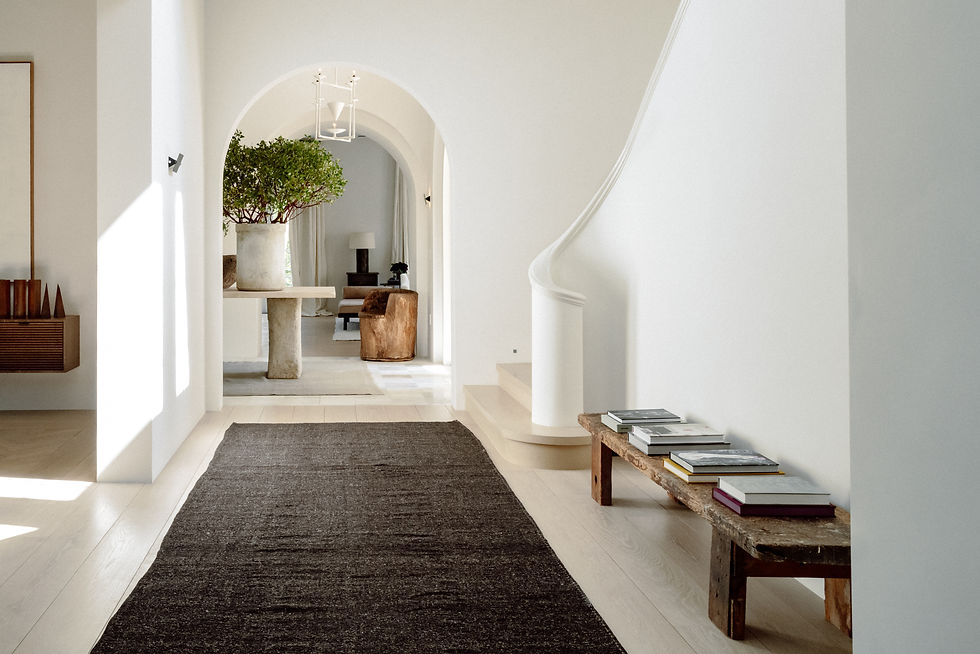
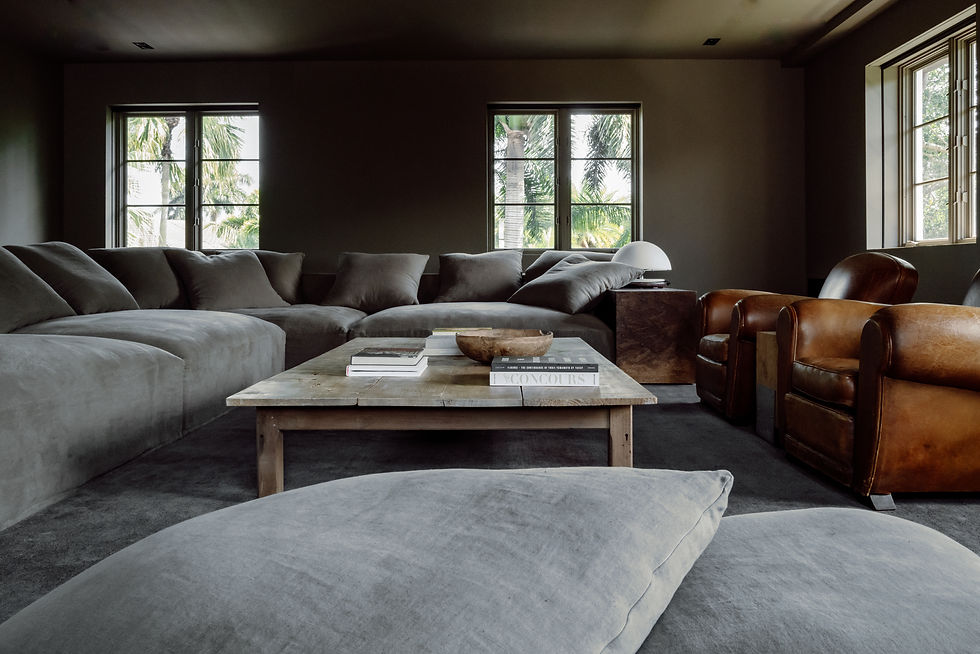
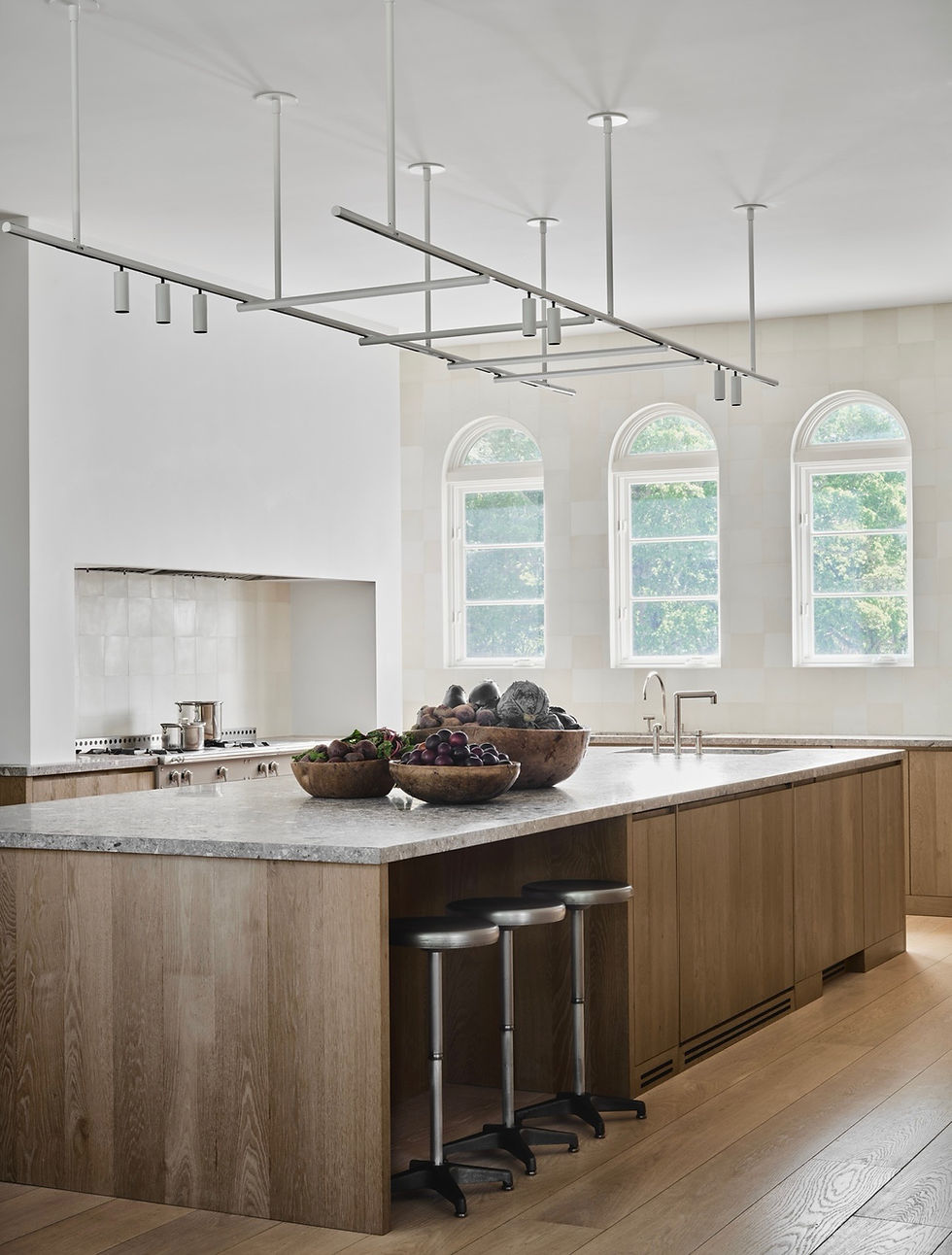
The Briggs Solomon aesthetic is defined by quiet luxury. Raw stone, pale plaster, bronze, linen, aged wood, sculptural silhouettes. His rooms breathe. Negative space is treated with the same reverence as the objects placed within it. The focus is on craftsmanship, authenticity, and emotional clarity. “I love all eras of interior design,” he shares. “What makes timeless design is the combination of all of them. Never lean on just one era. It will date itself, and it is not classic.” His list of influences reads like a syllabus in modern design: Christian Liaigre, Axel Vervoordt, Vincent Van Duysen, Joseph Dirand, as well as his cousins and mentors Kathleen and Tommy Clements. The sculptural quietude of his interiors reflects their shared sensitivity to form and material. As an artist, Solomon brings an innate understanding of composition to his work. “Less is more. I have always had an eye for placement and negative space,” he says of his paintings, many of which appear in his clients’ homes. His Instagram (@briggssolomoninc), a curated stream of shadowed staircases, raw materials, sculptural objects, and moments of stillness, mirrors this philosophy. It reveals a designer who sees beauty not in grandeur but in refinement.

Solomon’s life and career now unfold between Miami and Los Angeles, but Miami remains the emotional anchor. Coral Gables, where he lives, informs his work deeply. “Most of the homes are historical and built in the 1920s. Old Spanish. It is incredibly inspiring,” he says. He is equally energized by the Miami Design District. “The buildings are beautiful. The restaurants are incredible. The highest fashion and the most interesting people. It is a combination of all the best,” he notes. Against the city’s vivid visual culture, his serene aesthetic creates a compelling contrast. His work is not about competing with Miami’s exuberance but grounding it in craftsmanship, calm, and timeless design.

Among Solomon’s most celebrated Miami projects is Journey’s End, an expansive private estate where his design philosophy comes fully into view. The residence reveals the sophistication that has earned his studio international attention. In Journey’s End, Solomon choreographs scale, light, and materiality with surgeon-like precision. Stone meets linen. Bronze meets plaster. Sunlight glides across raw wood floors. This is a home that feels monumental yet deeply intimate. Lines are streamlined, compositions are careful, and nothing feels excessive. He describes his work as an orchestration. “Seeing a space that I think I could transform into something amazing inspires me,” he says. At Journey’s End, that transformation is palpable. The architecture and interiors are united in a quiet, confident harmony.

Solomon’s current project list is extensive, with many residences built from the ground up. He gravitates toward commissions that allow him to control the total environment, from the architectural shell to the landscape, gates, driveway, and hardware. “My most beautiful projects are those where the client gives me free rein over everything,” he says. One of his most personal current projects is a renovation for a longtime client who specifically asked for a collaboration between Solomon and his cousins Kathleen and Tommy Clements. “Getting to work with my family and my mentors does not get any better,” he says. This intergenerational design dialogue has become one of the most exciting arcs in his practice.


Perhaps the most anticipated development is Solomon’s forthcoming Coral Gables showroom, opening inside a restored 1920s historical home. It will function as both a retail destination and a living expression of his design world. “I am opening a boutique store in an old 1920s historical home. A beautiful showroom where things can be purchased off the floor immediately. Who wants to wait six months for a piece of furniture. By then you are sick of it anyway,” he says with a smile. The showroom brings Solomon full circle: a designer shaped by Miami’s historic homes now creating a space that celebrates history, craftsmanship, and modern restraint.

When asked about the future, Solomon reveals an unexpected ambition. “I love the idea of a TV show. Something that really shows what goes on behind the scenes and the time it takes to create timeless, good design,” he says. It feels fitting. Solomon’s process is deeply cinematic: slow, rich, exacting. A behind-the-scenes lens into his methodology would be a gift to design lovers everywhere.
In a cultural moment defined by maximalism and constant stimulation, Briggs Solomon’s quiet clarity feels especially resonant. His work is a reminder that luxury can be soft spoken. That refinement can be emotional. That architecture, art, and interior design can merge into a single breath. Miami is evolving quickly, becoming one of the world’s most significant design capitals. Solomon’s work is part of that evolution, offering a counterpoint to the city’s energy and anchoring it in timeless beauty. He designs spaces that soothe rather than overwhelm, that honor craft instead of trend, and that allow materials to speak in their own voices. For Miami, and for the design world at large, Briggs Edward Solomon is a defining talent of the present and future moment.

Website: https://www.briggssolomon.com/
Instagram: @briggssolomoninc
Email: Info@briggssolomon.com