


Big F1 Changes to Monitor at the Miami Grand Prix
Updated: Apr 29

“McLaren MCL 38” Licensed Under CC BY-NC-ND 4.0
Hear that? It’s the fast-approaching sound of revving engines speeding toward The Magic City. That’s right; it’s already that time of year again: Formula 1’s Miami Grand Prix is just around the corner.
Ever since debuting in 2022, The 305’s 192-mileish race has become one of the most anticipated events on the F1 calendar. Searches in the United States for how to bet on F1 skyrocket around this time, a trend that can be explained away by the combination of rising interest in the U.S. and the relative novelty of the event itself, as the folks over at OnlineSportsBetting.
Leading into the fifth running of the Miami Grand Prix, though, its status as a fledgling competition is no longer taking center stage. That honor belongs to two other developments.
First off, we have the sheer layover in between F1 races. We have now gone four weekends without a competition on the calendar. Fans are chomping at the bit for action.
Beyond this, a handful of changes, questions and storylines are currently dominating the F1 circuit. What, pray tell, are these developments? Let’s run through the hottest topics to monitor before the checkered flag gets waved.
How will New F1 Regulations Impact the Miami Grant Prix—and the Sport Overall?
F1 will be debuting a series of regulatory changes at the Miami Grand Prix. Most notably, these tweaks are focused on how power-units are overseen. And they come at a time when F1 has received criticism from drivers for rule changes it implemented at the start of this season.
Whether these adjustments will have a material impact on the Miami Grand Prix and the sport at large remains a matter of debate. But while explaining the nature of the changes, BBC News’ Andrew Benson notes that members of F1 teams don’t think these regulatory tweaks are enough to placate qualms held by drivers:
“The changes focus on returning the feel of driving in qualifying to a more conventional/natural ‘on the limit’ one, and alleviating concerns about the dangers of excessive closing speeds when one car is deploying full energy and another is charging its battery…The idea is to reduce the need for so-called 'lift and coast' in qualifying, as well as the time spent when the engine is charging the electrical motor at full-throttle, which in F1 jargon is known as 'super-clipping.’
“There are some other - rather esoteric - features of the new rules, about which drivers have complained, that should also be reduced. However, this is a long way from returning F1 driving to what it has traditionally been. One senior figure said these changes go about 20 percent of the way there. Mekies and his opposite number at McLaren, Andrea Stella, both agree that a hardware change is needed to go the full distance.”
Of course, not everyone agrees with this stance. Oscar Piastri of McLaren believes that “changes to the boost button” put the drivers in a better position to control their cars. He thinks the impact will be felt right off the bat.
Yet, most want to know whether these rule adjustments will impact the viewing experience. For that, the consensus appears to range from “maybe” to “probably not.”
This tracks with the nature of the changes. Drivers and team members obsess over the particulars – the granular. That entails a lot of behind-the-wheel details the audience will not detect.
Still, as Benson cautions, there can be a visible shift whenever you’re fiddling with the output of power in an F1 equipment. If you watch closely enough, you could notice more cars swapping positions on a more frequent basis than you’ve seen to start the season.
Major Car Updates are being Unveiled in Vice City
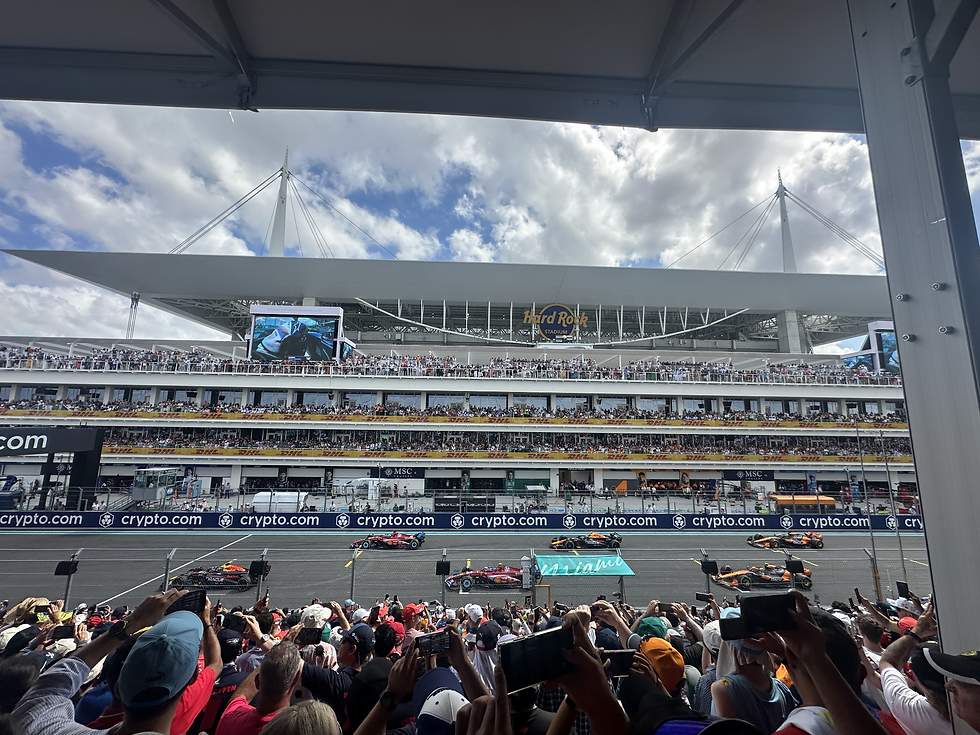
“McLaren MCL 38” Licensed Under CC BY-NC-ND 4.0
A handful of F1 teams were prepared to debut some pretty significant automotive updates at the Bahrain Grand Prix. Following the cancellation of that race as well as the Saudi Arabian Grand Prix, the Miami Grand Prix is now expected to serve as the metaphorical ribbon-cutting event.
What’s more, many believe that the updates we’ll see could be even more substantial than initially anticipated. With a 35-day break in between major races, teams have gotten a ton of time to futz and fiddle with their changes.
McLaren is immediately taken center stage entering the weekend festivities. Team Principal Andrea Stella has only fueled the speculation and hype with her recent comments about not just MCL40, but other squads’ cars as hell.
“In our intent, there was always the idea to deliver a completely new car – especially from an aerodynamic upgrades point of view – for the North American races,” he said, via Chris Medland over at the official Formula 1 website. “So we could keep up with this plan. Obviously, the fact that the calendar has been changed sort of helped a little bit, like I'm sure helped all the other teams that could work more streamlined towards upgrading the car rather than being busy with racing. But I could say overall that across Miami and Canada, we will see an entirely new MCL40..I would like to stress that this is what I would expect of most of our competitors.”
Those closing comments stand out the most. But it also raises a big question: Aside from the noticeable upgrades to McLaren’s car, which other teams should we be watching?
Cadillac immediately springs to mind. This is their first race on domestic soil, and they may want to make a big splash.
After a strong showing at the Japan Grand Prix, 19-year-old Andrea Antonelli and Mercedes have made no secret that they are looking to pick right up where they left off – only more so. Could this hint at some serious changes to the Mercedes-AMG F1 W17? It seems we’re about to find out.