


Are Pets Good For Kids’ Mental Health? Type of Animal And Duration of Bond Could Make All The Difference
Questions like “will getting a pet benefit our child’s mental health?” are increasingly common and pertinent. In Spain, for instance, more than half of all households now have one or more pets.

Attachment is the name for the emotional bond between a developing child and the caregiver who provides them with security and comfort. This kind of bond can also, to a certain extent, also be formed with animals, and these relationships have been shown to have a range of beneficial effects:
They boost emotional regulation, helping children learn to calm themselves
They build responsibility, empathy and moral standards
They “catalyse” relationships with people, for instance when a pet forms a point of common interest between a child and a family member they don’t know so well
They support prosocial behaviour
They help build understanding of nonverbal communication
They can function as a comfort object, taking the place of the child’s primary attachment when that person is not present.
But beyond these benefits, how does living alongside an animal impact children’s mental health? We can answer this question by looking at issues categorised as either internalising (such as depression, anxiety and their related physical symptoms) and externalising (a child’s behaviour and relationship with their environment: agression, rulebreaking, and so on).
The INMA study
We analysed data provided by the INMA Project (Infancia y Medio Ambiente, Children and Environment). This was a cohort study, meaning it involved periodic monitoring of a group of participants – in this case, from pregnancy to 6-7 years of age – through questionnaires, environmental measurements and clinical tests.
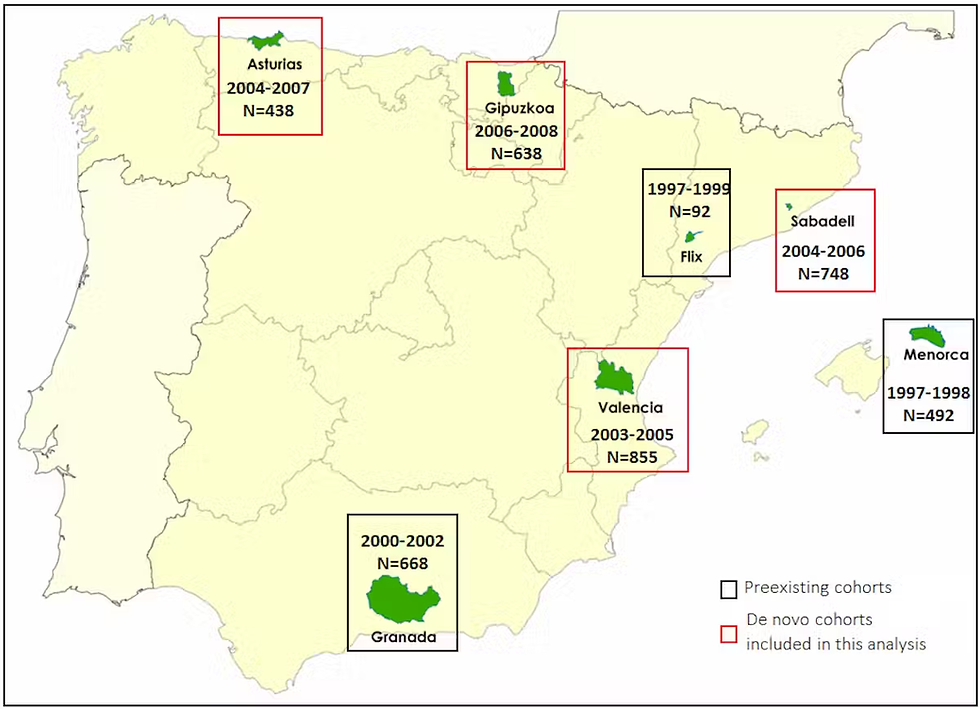
INMA cohorts included in the analysis (red squares). Number of participants (pregnant women) during the study’s recruitment period). Llúcia González
Our work included around 1,900 households in Spain, located in Asturias, Gipuzkoa (Basque Country), Sabadell (Barcelona) and Valencia. Of these, 52.3% had or had had one or more pets. 19.1% lived or had lived with dogs, 8.7% with cats, 14.8% with birds, and 28.6% with other animals such as hamsters, rabbits, turtles or fish.
When we evaluated the relationship between the presence of animals and mental health, we observed that children who had never had a pet showed the most positive scores. Some trends, although they cannot be considered significant, showed slightly more negative results among children who had always lived with pets. Those who had only had pets intermittently had higher risks of experiencing problems, though this pattern was only significant for cats.

The percentage of households with pets in our study.
To account for other factors that might influence this relationship, we performed additional analyses to adjust the results according to social class, sex, age, cohort, and so on. We found no difference between those who had never lived with animals and those who had had them always or only intermittently. This applied to the variable that studied any type of pet, as well as the specific ones that evaluated the relationship with dogs and birds.

Relationship between pets and children’s mental health.
The most interesting finding was that having a cat at age 4-5 was associated with more mental health problems. Having other animals – such as hamsters, rabbits, turtles or fish – consistently throughout early childhood seemed to have a protective effect on boys and girls alike.
Unpacking our findings
In the early years of life, emotional bonds may not be fully formed. Therefore, the presence of dogs or birds may not have a major effect on mental health. It is also possible that variables not included in our study may have influenced the results.
In the case of cats, their way of interacting with people could explain the effects observed. They are more independent, which limits emotional bonding, and some families may choose this animal as a pet because their children have emotional needs of their own.
In addition, toxoplasmosis is more common in cats than in other animals. This infection – caused by the parasite Toxoplasma gondii which can be transmitted to humans – is linked to behavioural problems, as well as serious mental disorders such as bipolar disorder and schizophrenia.
Having fish, turtles and hamsters on a constant basis does seem to protect children from mental health problems. These pets demand stable and easy contact, and help kids to learn responsibility, empathy and self-control.
Constant bonds are better
Our study did not clearly associate the presence of some pets, such as dogs and birds, with benefits or harm to childrens’ mental health. This could be because our work focused on exposure to pets in very early life – further studies focusing on older children are required.
In addition, children who lived with animals such as hamsters, rabbits, fish or turtles on a regular basis achieved better results than those who only had them intermittently. This suggests that a continuous link may be more beneficial than sporadic exposure.
While living with a pet can promote responsibility, empathy and emotional self-regulation, its real impact depends on factors such as the nature of the bond, age and style of upbringing.